Turn on cookies to sign in
Signing in saves your progress to your Curie account. We can only do that with cookies on — turn them on to continue.
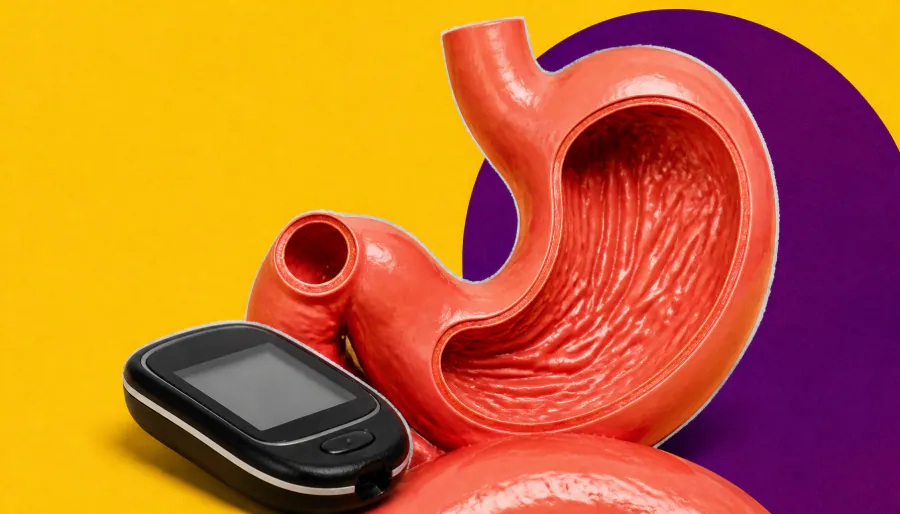
A GLP-1 receptor antagonist called avexitide significantly reduced severe hypoglycemia episodes in patients who developed post-bariatric hypoglycemia after gastric bypass. Phase 3 LUCIDITY trial data showed a 55% greater reduction in dangerous low blood sugar events compared to placebo — and there's currently no FDA-approved treatment for this condition.
For the roughly 12% of gastric bypass patients who develop post-bariatric hypoglycemia (PBH) — a condition causing dangerous blood sugar crashes 1–3 hours after meals — there's finally a promising treatment on the horizon. Data from the phase 3 LUCIDITY trial, presented at ObesityWeek, showed that avexitide (Amylyx Pharmaceuticals), a GLP-1 receptor antagonist, significantly cut the rate of severe hypoglycemia events compared to placebo over 16 weeks.
The trial enrolled 78 adults (96% women, mean age 50.8) who had undergone Roux-en-Y gastric bypass at least a year prior. All participants received structured dietary support and continuous glucose monitoring — yet avexitide still outperformed placebo by a wide margin.
By the Numbers:
Why it matters: PBH has no FDA-approved therapy, leaving patients with limited options beyond dietary changes. Avexitide's consistent results across six trials now make a strong case for regulatory approval — offering real hope to a population that has long been underserved.