Curie Brief
Turn on cookies to sign in
Signing in saves your progress to your Curie account. We can only do that with cookies on — turn them on to continue.
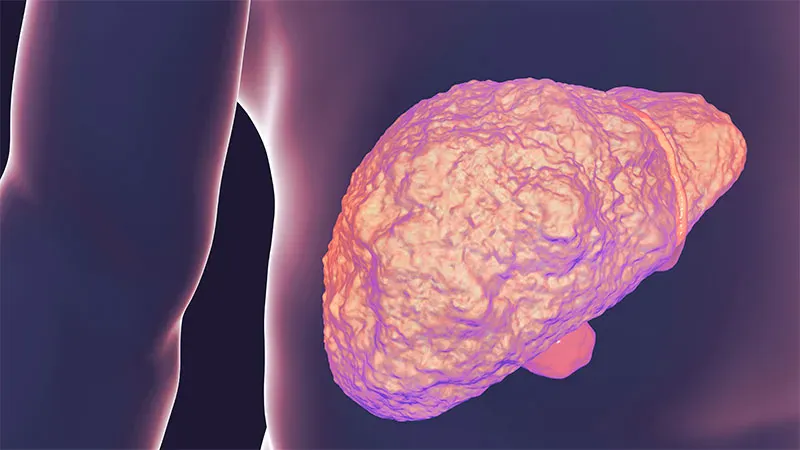
A promising liver drug keeps delivering. Efruxifermin 50 mg, a novel FGF21 analogue, significantly improved fibrosis response rates in patients with MASH and moderate-to-advanced fibrosis or compensated cirrhosis across two phase 2b trials. Crucially, most early responders maintained those gains through the full 96-week study period, signaling a lasting antifibrotic effect.
Efruxifermin, a bivalent FGF21 analogue given as a weekly subcutaneous injection, is showing real staying power in the fight against metabolic dysfunction-associated steatohepatitis (MASH). Results from two phase 2b trials — HARMONY (moderate-to-advanced fibrosis) and SYMMETRY (compensated cirrhosis) — presented at the ACG 2026 Annual Scientific Meeting show that the 50 mg dose significantly outperformed placebo in improving liver fibrosis over 96 weeks, with a well-tolerated safety profile.
What's especially encouraging is the durability of the response. Among patients in HARMONY who responded early (by week 24), a striking 92% still showed improvement at week 96 — suggesting efruxifermin isn't just buying time, but potentially reshaping the disease course.
MASH is a rapidly growing liver disease with limited treatment options, and cirrhosis remains a major endpoint of concern. These results suggest efruxifermin could offer a meaningful, durable antifibrotic benefit — and with phase 3 trials now underway, it may be on a path toward becoming a standard-of-care option.