Curie Brief
Turn on cookies to sign in
Signing in saves your progress to your Curie account. We can only do that with cookies on — turn them on to continue.

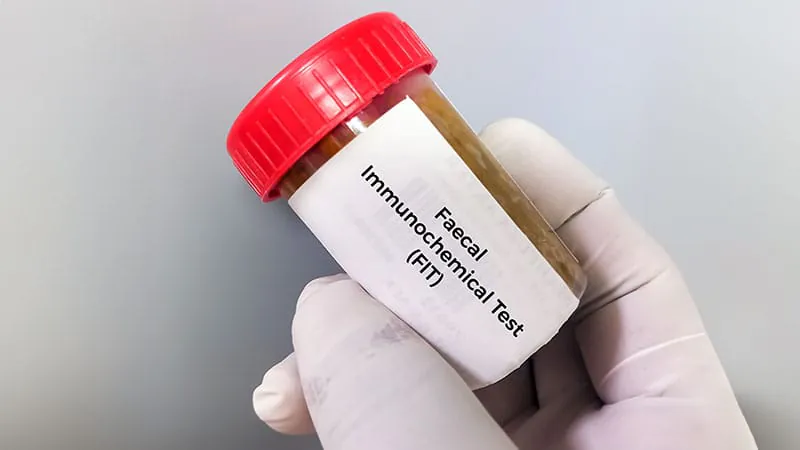
A large randomized trial suggests that low-risk individuals could safely extend their colorectal cancer (CRC) screening interval from 2 to 3 years without missing more advanced cases. The PERFECT-FIT trial found that those with undetectable fecal hemoglobin — nearly 93% of the intervention group — showed similar advanced neoplasia detection rates at 3 years versus the standard 2-year schedule. Longer-term data, including interval cancer rates, are still pending.
Less frequent screening, same results? A large Dutch randomized trial presented at UEG Week 2026 suggests that extending colorectal cancer (CRC) screening intervals from 2 to 3 years may be safe for low-risk individuals — specifically those with undetectable fecal hemoglobin (f-Hb) on their prior fecal immunochemical test (FIT). The PERFECT-FIT trial enrolled over 20,000 participants and assigned personalized screening intervals based on prior f-Hb levels, with 92.9% of the intervention group qualifying for the extended 3-year window.
The key finding: advanced neoplasia detection in the 3-year group was just 0.7%, virtually identical to the 0.8% seen in the standard 2-year control group. Overall, the personalized approach didn't significantly boost detection rates, but it did highlight that the vast majority of screened individuals may not need to return as frequently — a potential win for healthcare resource efficiency.
By the Numbers:
Why it matters: If confirmed with longer follow-up, extending screening intervals for low-risk individuals could reduce patient burden and free up healthcare resources — without compromising cancer detection. Experts caution, however, that one screening round isn't enough to change policy just yet.