Turn on cookies to sign in
Signing in saves your progress to your Curie account. We can only do that with cookies on — turn them on to continue.
A new targeted drug could crack open solid tumors' defenses. Researchers developed FEBP-sTβRII, a drug that zeroes in on tumors, breaks down their protective barriers, and activates the immune system — eliminating aggressive pancreatic tumors in 75% of mice and even creating lasting immunity against other cancers. Human clinical trials are planned for 2027.
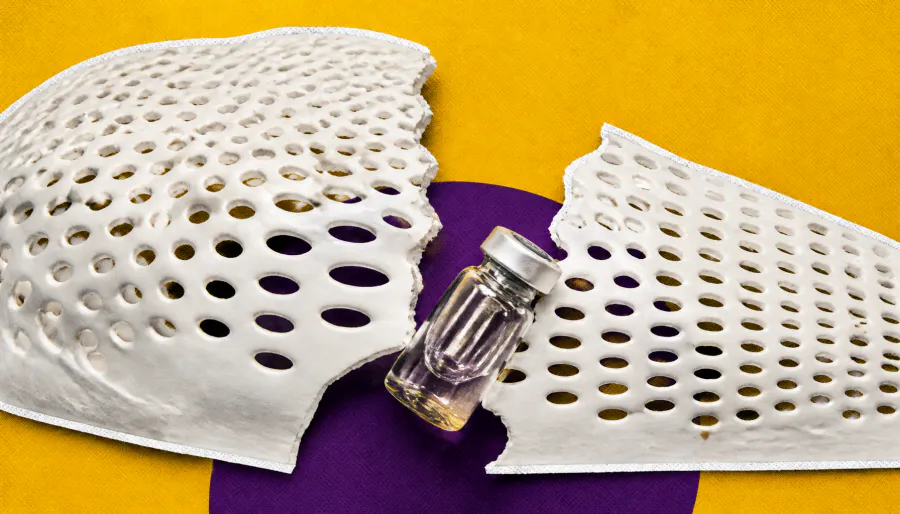
Many of the deadliest solid tumors — pancreatic, breast, colon, and lung — wrap themselves in dense, scar-like tissue that blocks immune cells from getting in. That's a big reason why immunotherapy, despite being a game-changer for some cancers, still fails most patients with solid tumors. A new experimental drug called FEBP-sTβRII, published in Cancer Cell, may have found a way around this problem.
The drug works by blocking TGF-β, a molecule tumors use to build their protective barriers and suppress immune activity. Unlike previous TGF-β blockers that flooded the whole body — with limited success and safety concerns — this one carries a molecular tag that homes in specifically on tumors, accumulating inside them for days while barely touching healthy tissue. Once inside, it triggers a chain reaction that reprograms the tumor's own support cells to help the immune system recognize and attack cancer.
By the Numbers:
Why it matters: This approach could unlock immunotherapy for the many patients with solid tumors that don't respond to existing treatments. The long-lasting immune memory it creates may even offer protection against future or different cancers — and human trials are set to begin in 2027.