Turn on cookies to sign in
Signing in saves your progress to your Curie account. We can only do that with cookies on — turn them on to continue.
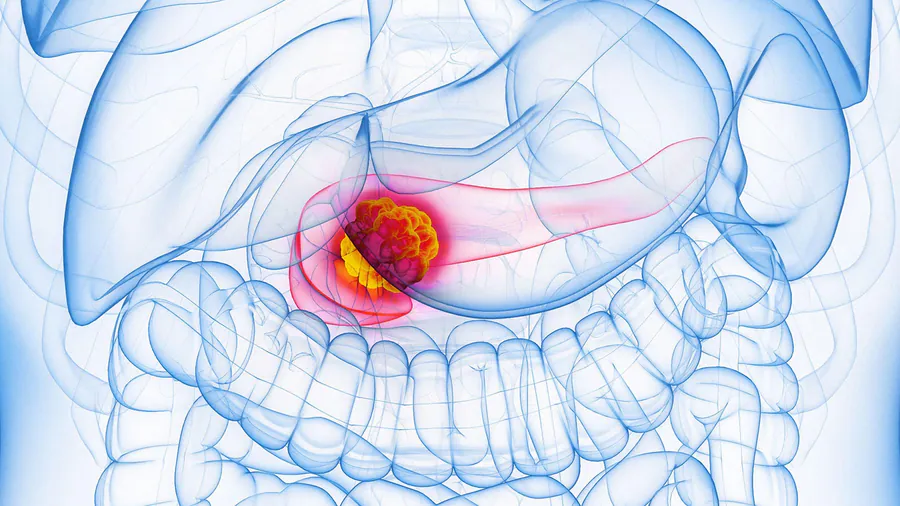
A promising new combo for one of cancer's toughest fights. The first-in-class RAS inhibitor daraxonrasib, paired with chemotherapy, achieved a 61% objective response rate — including 8.2% complete responses — in patients with metastatic pancreatic cancer in an early-phase trial. Researchers say the results could be "transformative," already surpassing historical survival benchmarks for standard chemotherapy.
Pancreatic cancer has long been one of oncology's most stubborn challenges, but a new drug combination is turning heads. In a phase I/II trial, the oral RAS inhibitor daraxonrasib (Rasonque) combined with gemcitabine and nab-paclitaxel delivered a 61% confirmed objective response rate — including 8.2% complete responses — in 61 patients with previously untreated metastatic pancreatic adenocarcinoma (PDAC). Median progression-free survival hit 12.8 months, and the 12-month overall survival rate reached 76.6%, well above the historical benchmark of 8.5–11.1 months with standard chemotherapy alone.
Presented at the EORTC-NCI-AACR Symposium in Barcelona, the findings are generating real excitement — and cautious optimism. Experts note the study lacks a randomized control group, so confirmation in the ongoing phase III RASolute 303 trial will be critical.
Why it matters: RAS mutations drive the vast majority of pancreatic cancers, and effective targeted therapies have been elusive. If phase III results hold up, daraxonrasib could redefine first-line treatment for a disease where progress has been painfully slow.