Turn on cookies to sign in
Signing in saves your progress to your Curie account. We can only do that with cookies on — turn them on to continue.
Move over PFOA and PFOS — two lesser-known "forever chemicals" are now in the spotlight. A USC study found that exposure to PFHpA and PFNA was linked to up to 2.5 times the odds of developing liver cancer. And for people genetically predisposed to fatty liver disease, the risk may be even higher.
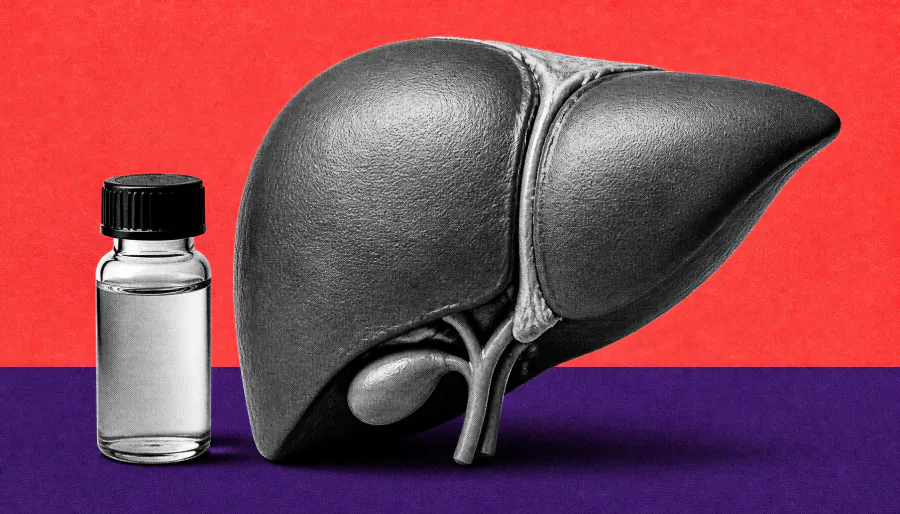
Move over PFOA and PFOS — two lesser-studied "forever chemicals" are now raising serious alarms. A pioneering USC study published in Environmental Health Perspectives found that blood concentrations of PFHpA and PFNA — both per- and polyfluoroalkyl substances (PFAS) — were significantly associated with higher odds of developing hepatocellular carcinoma (HCC), the most common form of liver cancer.
What makes this finding especially striking is the genetic angle. People with an inherited predisposition to fatty liver disease (MASLD) who also had high PFHpA exposure faced a dramatically amplified risk — a "one-two hit" of genetics and chemical exposure. Those with low genetic susceptibility showed no significant association, suggesting that biology plays a key role in determining who is most vulnerable.
Why it matters: HCC has a five-year survival rate below 20%, making early detection critical. These findings open the door to actionable prevention — from targeted screening for high-risk individuals to practical steps like dietary changes and water filtration to reduce PFAS exposure.