Turn on cookies to sign in
Signing in saves your progress to your Curie account. We can only do that with cookies on — turn them on to continue.
A common gut antibody called IgA may be quietly protecting us from colon cancer — and scientists just figured out how. Researchers at Rockefeller University found that mice without IgA developed more than twice as many colon tumors, but restoring the antibody orally eliminated the extra risk. The discovery points to a natural "brake" on cancer cell growth that could one day be targeted for prevention.
A common gut antibody called IgA may be quietly protecting us from colon cancer — and scientists just figured out how. Researchers at Rockefeller University, publishing in Nature, found that mice lacking immunoglobulin A (IgA) developed more than twice as many colon tumors as normal mice. Crucially, when IgA was restored orally, the elevated tumor risk disappeared entirely — suggesting the antibody plays a direct, active role in cancer prevention.
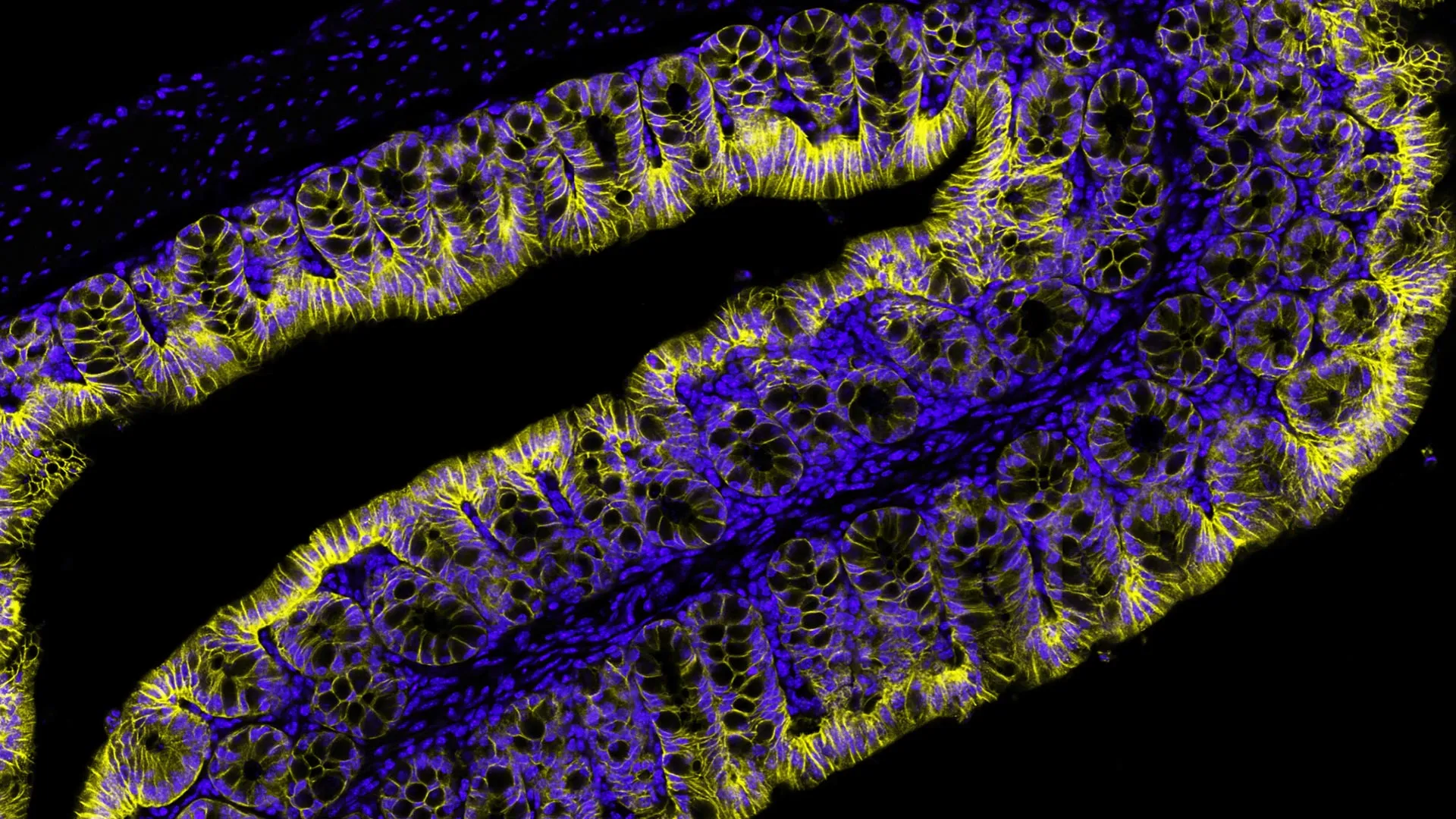
The mechanism centers on a receptor called DMBT1, found on the surface of intestinal lining cells. Gut bacteria naturally stimulate DMBT1 to trigger cell division — a normal, healthy process. But without IgA binding to DMBT1 and putting the brakes on, cells can divide unchecked, setting the stage for tumor formation. The team observed these gene activity changes before any tumors appeared, pointing to IgA as an early-stage gatekeeper.
Key Takeaways:
Why it matters: Most cancer research focuses on destroying existing tumors. This study shifts the lens to prevention — revealing how the immune system and gut microbiome quietly cooperate to stop cancer before it starts.