Turn on cookies to sign in
Signing in saves your progress to your Curie account. We can only do that with cookies on — turn them on to continue.
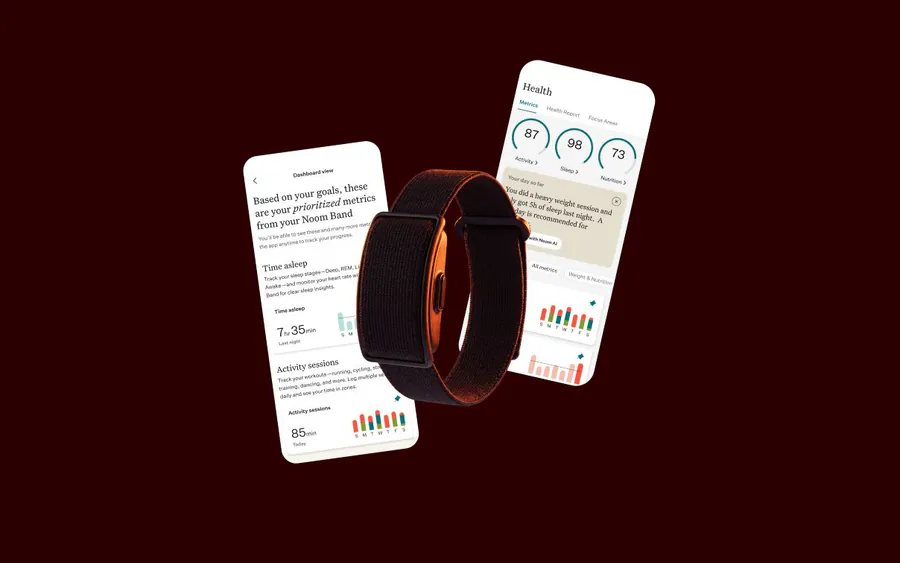
Noom just launched its own wrist-worn wearable, the Noom Band, designed to supercharge its metabolic health platform with continuous sleep, activity, and heart data. The device will be bundled into employer and health plan partnerships at no extra cost starting early 2027. Early data suggests wearable users in Noom's GLP-1 program were 34% more likely to hit a 20-pound weight loss milestone by month four.
Noom is leveling up from weight loss app to full-blown metabolic health platform — and it's bringing its own wearable along for the ride. The company unveiled the Noom Band, a faceless wrist-worn device powered by Sensor Bio, at HLTH 2026. It tracks heart rate, heart rate variability, SpO2, sleep, and activity, feeding data directly into Noom's behavior change platform. The device will be bundled into enterprise partnerships at no additional upfront cost, starting in early 2027.
The move fills a key gap: fewer than 10% of Noom's members currently use any wearable. By owning the hardware, Noom controls how physiological signals are interpreted — rather than competing with a third-party app for user attention. The company also plans to use the wearable as a milestone reward to keep members engaged when scale progress stalls.
By the Numbers:
Why it matters: As chronic disease management increasingly moves into the home, Noom's integrated approach — combining behavior change, telehealth, diagnostics, and now wearables — signals a broader industry shift toward outcomes-based, tech-enabled care that payers and employers are being asked to fund.