Turn on cookies to sign in
Signing in saves your progress to your Curie account. We can only do that with cookies on — turn them on to continue.
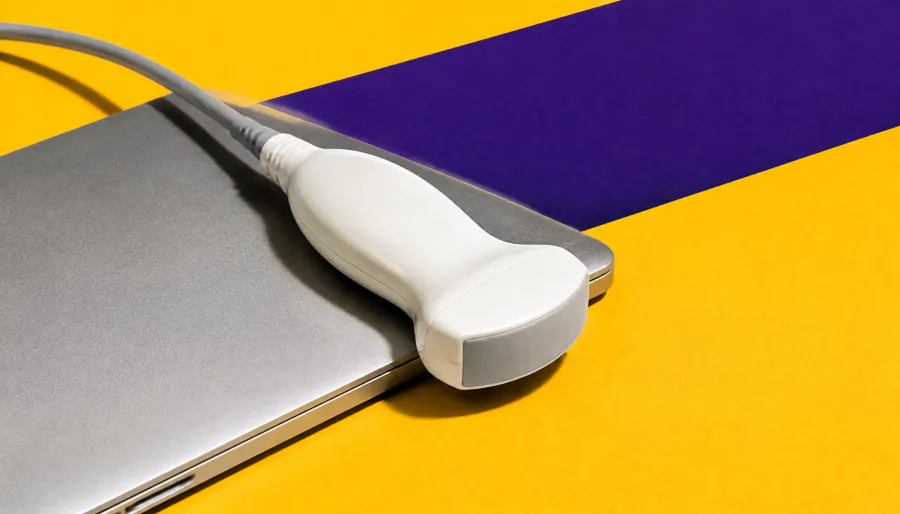
AI-generated echo reports are just as good as human ones — and cardiologists can't even tell the difference. The AI ECHO INSIGHT trial found that an AI model matched the accuracy of both sonographers and cardiologists in interpreting heart ultrasounds, while cutting reading time by nearly half. For patients, that could mean faster results; for doctors, more time at the bedside.
AI reads echocardiograms as well as cardiologists — and twice as fast
A landmark trial presented at the American Heart Association Scientific Sessions has found that AI-generated echocardiogram reports are just as accurate as those written by human clinicians — and cardiologists couldn't tell the difference. The AI ECHO INSIGHT trial tested the Echo Prime/EchoNet AI model on 1,200 transthoracic echocardiograms (TTEs), comparing AI-drafted reports against those from sonographers and cardiologists. The result: AI was deemed noninferior, and over-reading cardiologists were unable to distinguish AI drafts from human ones.
Beyond accuracy, AI-assisted reads were more consistent with historical records than human-only workflows, suggesting AI could help reduce the natural variability that occurs between different readers. The time savings were equally notable — cardiologists spent about 46% less time per study when working with an AI draft, shaving roughly 4 minutes off each read.
By the Numbers
Why it matters: Echocardiography is one of cardiology's most relied-upon diagnostic tools, and demand is only growing. AI that can reliably draft reports — faster and more consistently — could ease clinician workload, speed up patient results, and free up cardiologists to spend more time on direct patient care. Experts emphasize that human oversight remains essential, but this trial marks a meaningful step toward AI becoming a trusted partner in cardiac imaging.