Turn on cookies to sign in
Signing in saves your progress to your Curie account. We can only do that with cookies on — turn them on to continue.
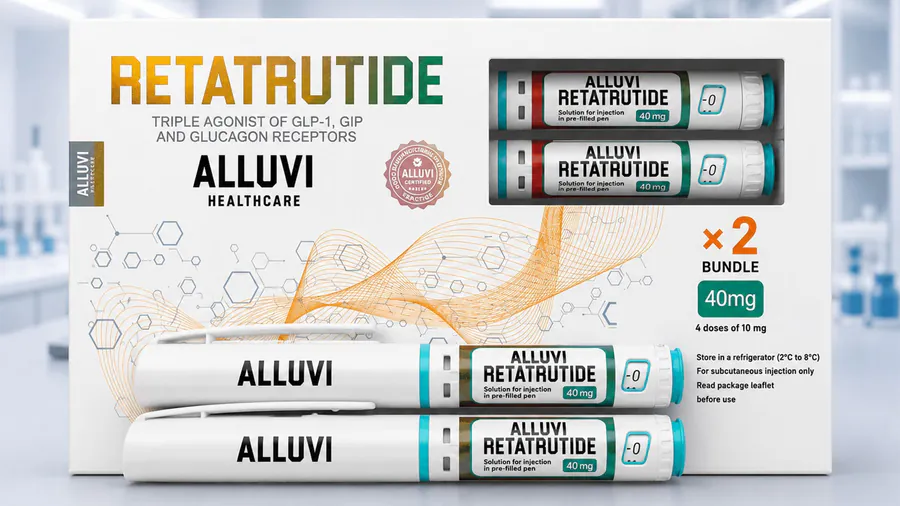
Retatrutide, a promising investigational triple-hormone agonist, is being sold online before it's even FDA-approved — and that's a serious problem. Gray-market vials labeled "retatrutide" may contain unknown ingredients, incorrect doses, or dangerous contaminants. A clinical endocrinologist is urging patients to skip the online checkout and start with a doctor's visit instead.
Retatrutide — nicknamed "Reta" or misleadingly called "GLP-3" online — is generating buzz after impressive phase 3 trial results were presented at the European Association for the Study of Diabetes meeting and published simultaneously in the New England Journal of Medicine and The Lancet. But here's the catch: it's still investigational, not FDA-approved, and federal law explicitly prohibits it from being compounded or sold.
That hasn't stopped gray-market vendors. Products labeled "retatrutide" are already circulating online and at medical spas, with no guarantee of what's actually inside. Unlike drugs studied in clinical trials — made to precise specifications, dosed carefully, and monitored closely — these vials could contain impurities, incorrect concentrations, or may not even contain the actual molecule. Buyers are often left dosing themselves based on online forum guesswork.
The FDA has taken notice, issuing a March 2026 warning letter to at least one vendor (Gram Peptides) for marketing unapproved retatrutide products.
Key Takeaways:
Why it matters: As enthusiasm for GLP-1 drugs grows, so does the gray market around next-generation obesity treatments. Clinicians need to proactively counsel patients before curiosity leads to a potentially dangerous self-experiment.