Turn on cookies to sign in
Signing in saves your progress to your Curie account. We can only do that with cookies on — turn them on to continue.

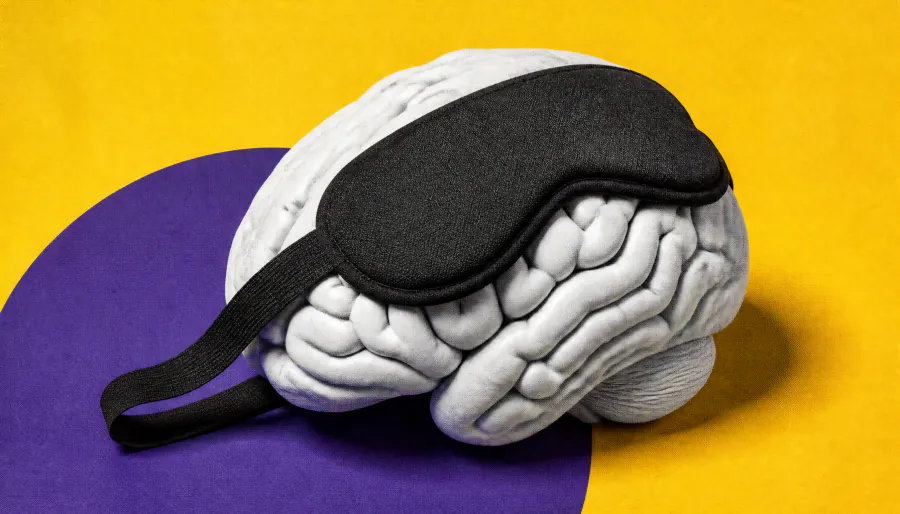
Your sleeping brain may be sounding an early Alzheimer's alarm. UC Berkeley researchers found that tau protein buildup in the frontal cortex disrupts coordinated "slow waves" during deep sleep — the very waves that help consolidate memories. These fragmented, "lonely" waves were linked to poorer memory retention, even in people with no Alzheimer's diagnosis yet.
Your sleeping brain might be showing signs of Alzheimer's long before any symptoms appear. Researchers at UC Berkeley discovered that tau — a protein associated with Alzheimer's disease — accumulates in the brain's frontal cortex and disrupts the synchronized slow brain waves that occur during deep sleep. These waves normally travel in coordinated cascades across the brain, playing a critical role in consolidating memories overnight. When tau builds up, the waves become fragmented and isolated — what the researchers dubbed "lonely waves" — and memory suffers as a result.
The study, published in Nature Neuroscience, compared brain activity in healthy young adults (early 20s) with older adults (mid-60s to mid-70s) using EEG recordings, PET scans, and spinal fluid analyses. Participants with more isolated slow waves performed worse on overnight memory tasks, and those tracked over several years showed worsening wave coordination as tau levels rose.
Key Takeaways:
Why it matters: This research opens a potential new window for early detection of Alzheimer's-related changes through sleep monitoring — a far less invasive approach than PET scans or spinal taps — and may point toward future therapies aimed at preserving memory before significant cognitive decline sets in.