Turn on cookies to sign in
Signing in saves your progress to your Curie account. We can only do that with cookies on — turn them on to continue.
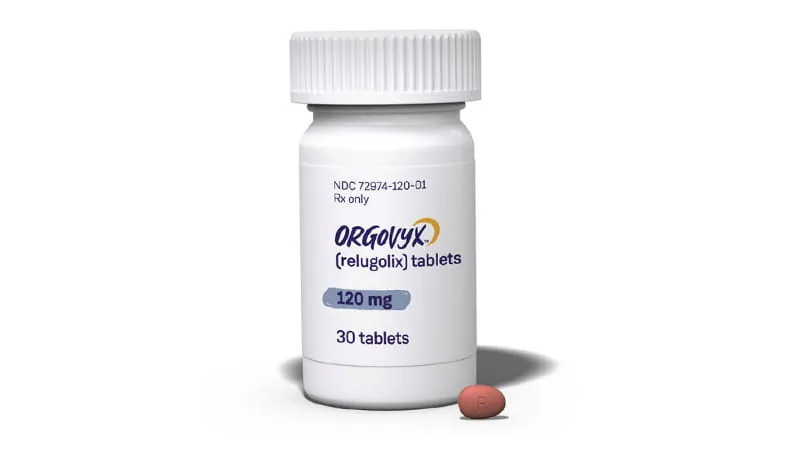
A phase 3 trial found that relugolix combination therapy — already approved for uterine fibroids and endometriosis — may double as a contraceptive. Among 981 women who relied on it as their sole birth control for a year, only 8 pregnancies occurred, yielding a 1.2% cumulative pregnancy rate. Bone density loss was the most notable side effect, prompting 16.6% of participants to discontinue.
A fibroid and endometriosis drug may have an unexpected bonus: birth control. The phase 3 SERENE trial, presented at ASRM 2026, found that relugolix combination therapy (CT) — which pairs the GnRH antagonist relugolix with estradiol and norethindrone acetate — demonstrated meaningful contraceptive efficacy when used as the sole method of birth control over one year.
Among 981 women with uterine fibroids or endometriosis who had intercourse with male partners, just 8 pregnancies occurred, translating to an at-risk Pearl Index of 1.27 and a cumulative 1-year pregnancy rate of 1.2%. Younger women (≤35 years) had a higher pregnancy rate of 2.5%, while those over 35 saw just 0.6%. No new safety signals emerged, though bone mineral density declined modestly on average.
By the Numbers:
Why it matters: While experts caution that relugolix CT is unlikely to become a primary contraceptive, these findings suggest it could offer meaningful pregnancy protection as a secondary benefit for women already using it to manage fibroids or endometriosis — a clinically relevant insight for OB-GYN practice.