Turn on cookies to sign in
Signing in saves your progress to your Curie account. We can only do that with cookies on — turn them on to continue.
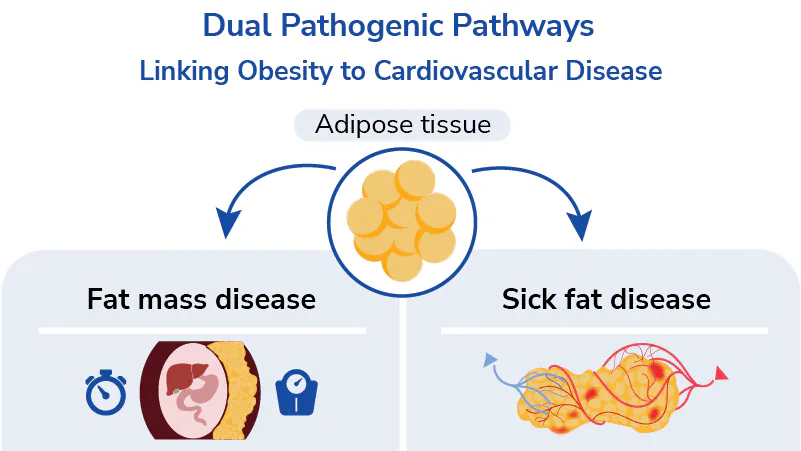
A new clinical practice statement from the Obesity Medicine Association identifies two ways obesity damages the heart — through the physical burden of excess fat and through dysfunctional, inflammation-triggering adipose tissue. The statement calls for a "treat obesity first" approach, arguing that tackling obesity directly — not just its downstream complications — is key to reducing cardiovascular risk. GLP-1 receptor agonists are highlighted as therapies with proven cardiovascular benefits.
A new clinical practice statement from the Obesity Medicine Association lays out two distinct but intertwined pathways through which obesity drives cardiovascular disease (CVD). The first, "fat mass disease," involves the mechanical strain of excess body weight — increasing circulatory demands, enlarging the heart, and contributing to conditions like heart failure with preserved ejection fraction (HFpEF) and obstructive sleep apnea. The second, "sick fat disease" (adiposopathy), involves dysfunctional adipose tissue that fuels insulin resistance, chronic inflammation, dyslipidemia, and a pro-thrombotic state — all major CVD risk factors.
The statement, published in Obesity Pillars, advocates a "treat obesity first" philosophy — a meaningful shift from managing obesity's downstream effects to treating it as a primary disease. Experts note that while the two pathways are conceptually distinct, they frequently coexist and reinforce each other, and treatment should address both simultaneously.
Key Takeaways:
Why it matters: Cardiologists are increasingly being called upon to prescribe obesity medications — not just manage its complications. This statement signals a growing consensus that treating obesity itself is essential cardiovascular medicine.