Turn on cookies to sign in
Signing in saves your progress to your Curie account. We can only do that with cookies on — turn them on to continue.
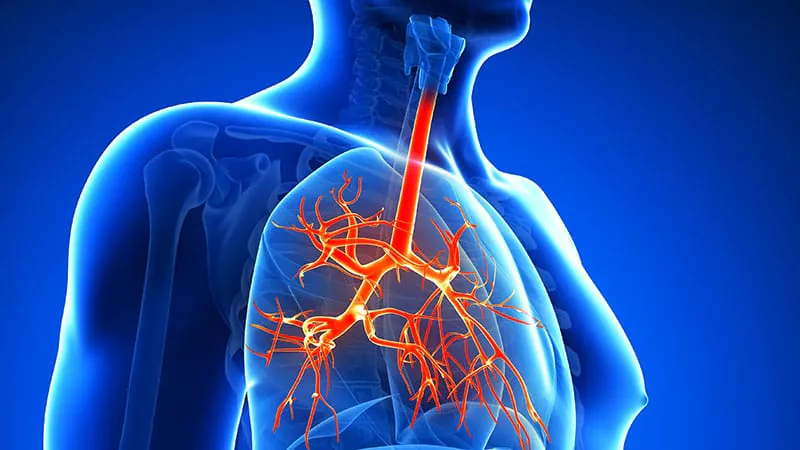
A bronchoscopic procedure using electrical pulses to remodel airway tissue showed durable symptom improvements in chronic bronchitis patients over 24 months — but the RheSolve trial technically missed its primary endpoint. The surprise? The control group improved far more than expected, simply from mechanical mucus removal. Researchers say a follow-up study is likely needed to confirm the therapy's true benefit.
The RheSolve trial tested bronchial rheoplasty — a procedure using pulsed electric fields to remodel airway tissue and reduce mucus production — in 273 patients with moderate-to-severe chronic bronchitis across 37 US and European centers. While the trial missed its primary endpoint (COPD Assessment Test scores), the miss was largely attributed to an unexpectedly strong response in the control group, which received mechanical mucus removal without the electrical pulses.
The real story emerged in secondary outcomes: patients who received the full bronchial rheoplasty treatment showed sustained improvements in cough and sputum scores (CASA-Q) through 24 months, well above the minimally clinically important difference. In contrast, the mechanical-only group's improvements faded by 12 months — suggesting the electrical component provides lasting benefit beyond simple mucus clearance. Patients who crossed over to active treatment at 12 months also saw their scores rebound.
By the Numbers:
Why it matters: Chronic bronchitis is a major driver of COPD morbidity with limited treatment options. While the trial's primary endpoint wasn't met, the durable secondary outcomes and clean safety profile keep bronchial rheoplasty on the radar as a promising intervention — pending further study.