Turn on cookies to sign in
Signing in saves your progress to your Curie account. We can only do that with cookies on — turn them on to continue.
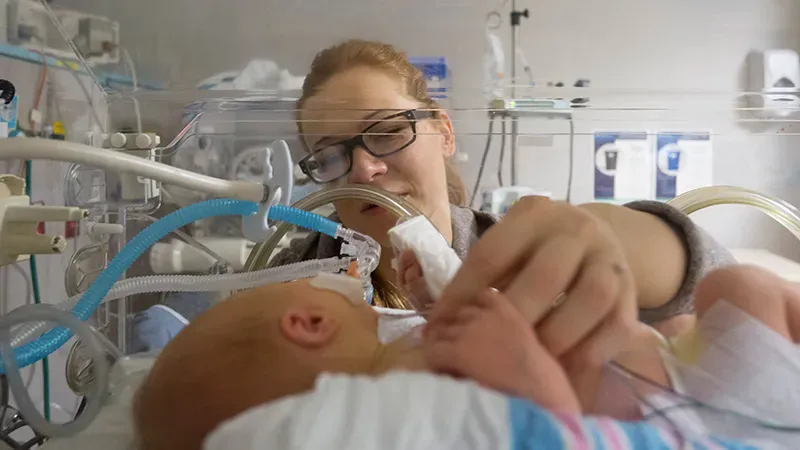
A new study found that mild controlled hypothermia — gently lowering body temperature — cut the risk of surgery by 70% and in-hospital death by 41% in premature infants with necrotizing enterocolitis (NEC). The prospective study followed 285 preterm infants across eight Brazilian NICUs. Researchers say the findings are promising but call for large-scale randomized trials to confirm the results.
Necrotizing enterocolitis (NEC) is one of the most devastating gut conditions affecting premature infants, and for decades, clinicians have had few tools to stop it from progressing. A new prospective study out of Brazil may be changing that — researchers found that adding mild controlled hypothermia to standard NICU care significantly reduced the need for surgery and in-hospital deaths among preterm infants with moderate NEC.
The study followed 285 preterm infants (birth weight under 1,500 g) across eight Brazilian level III NICUs between 2019 and 2023. Infants in the hypothermia group had their esophageal temperature lowered to 35.5°C for 48 hours, while the control group received standard care maintaining normal skin temperature. Both groups also received gastric decompression, parenteral nutrition, withheld enteral feeds, and broad-spectrum antibiotics.
By the Numbers:
Why it matters: NEC remains one of the leading causes of death and disability in premature infants, with no proven therapies to halt its progression. This study offers an encouraging signal that mild cooling — a relatively accessible intervention — could dramatically improve outcomes, though randomized trials are still needed to confirm long-term safety and efficacy.