Turn on cookies to sign in
Signing in saves your progress to your Curie account. We can only do that with cookies on — turn them on to continue.
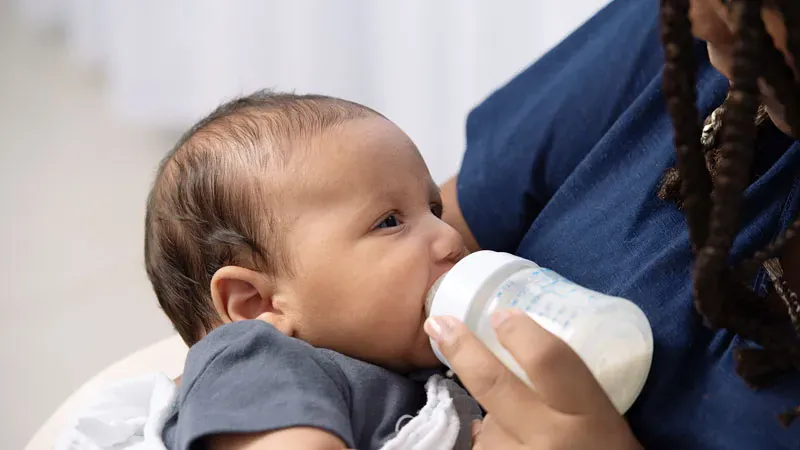
Good news for worried parents: a rare infant food allergy may be short-lived. A meta-analysis of 12 studies found that about 76% of children with cow's milk-triggered food protein-induced enterocolitis syndrome (FPIES) — a condition causing severe vomiting and diarrhea — developed tolerance to milk by around 26 months of age. Symptoms typically began as early as 3.73 months, but most kids outgrew the condition within their first few years of life.
Most babies with a rare milk allergy will outgrow it before their third birthday
A new meta-analysis offers reassuring news for families navigating cow's milk-triggered food protein-induced enterocolitis syndrome (FPIES) — a rare but distressing food allergy in infants that causes repeated vomiting and diarrhea. Researchers analyzed 12 cohort studies spanning 1998 to 2024 across seven countries and found that the majority of affected children eventually develop tolerance to cow's milk protein.
The findings suggest a generally favorable outlook, though the authors caution that FPIES can coexist with other allergic conditions and may involve reactions to multiple foods. The studies varied in how they defined "tolerance," and most were retrospective with small sample sizes, so some uncertainty remains.
By the Numbers:
Why it matters: For clinicians and caregivers, this data supports a cautiously optimistic prognosis for cow's milk FPIES. Most children can be expected to outgrow the condition in early toddlerhood, which may inform monitoring strategies and the timing of oral food challenges.