Turn on cookies to sign in
Signing in saves your progress to your Curie account. We can only do that with cookies on — turn them on to continue.
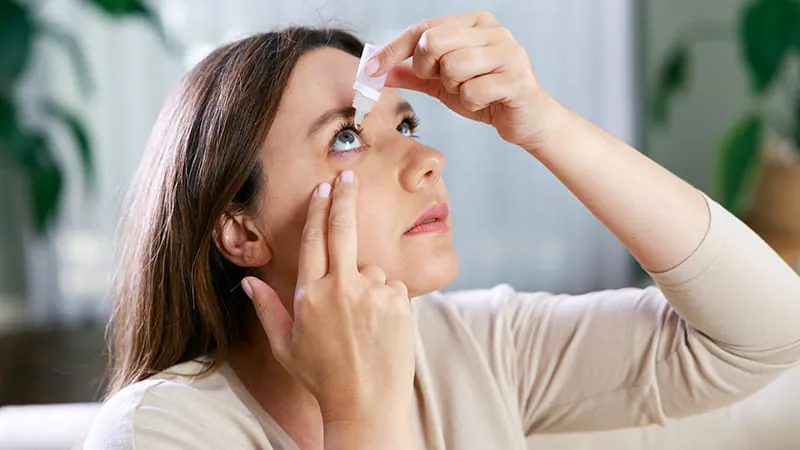
Dry eye affects up to 80% of menopausal women — more than those who report hot flashes — yet it's barely on clinicians' radar. Researchers at The Menopause Society 2026 Annual Meeting are pushing to add dry eye to standard menopause symptom checklists, arguing that hormonal shifts (especially falling androgens) destabilize the tear film. A quick 2-minute screening tool could help catch and treat it early.
Dry eye affects up to 80% of peri- and postmenopausal women — actually outpacing the 50%–75% who report hot flashes — yet it rarely makes it onto menopause symptom checklists. Researchers presenting at The Menopause Society 2026 Annual Meeting are calling for that to change, proposing a clinical framework called Dry Eye Syndrome of Menopause (DESM) to formally recognize the condition as a hormonal symptom of the menopausal transition.
The culprit, they argue, is less about estrogen and more about androgens. Testosterone drops roughly 50% after menopause, and sex hormone receptors are found throughout the ocular surface — leading to reduced oil and tear secretion, an unstable tear film, and chronic inflammation. Notably, ocular surface signs (like corneal staining and tear breakup time) are measurably worse in postmenopausal women even when symptoms appear similar to those in premenopausal women.
Key Takeaways:
Why it matters: Millions of menopausal women may be silently living with a treatable condition that simply isn't being asked about. Adding dry eye to standard intake checklists could close a significant care gap with minimal effort.