Turn on cookies to sign in
Signing in saves your progress to your Curie account. We can only do that with cookies on — turn them on to continue.
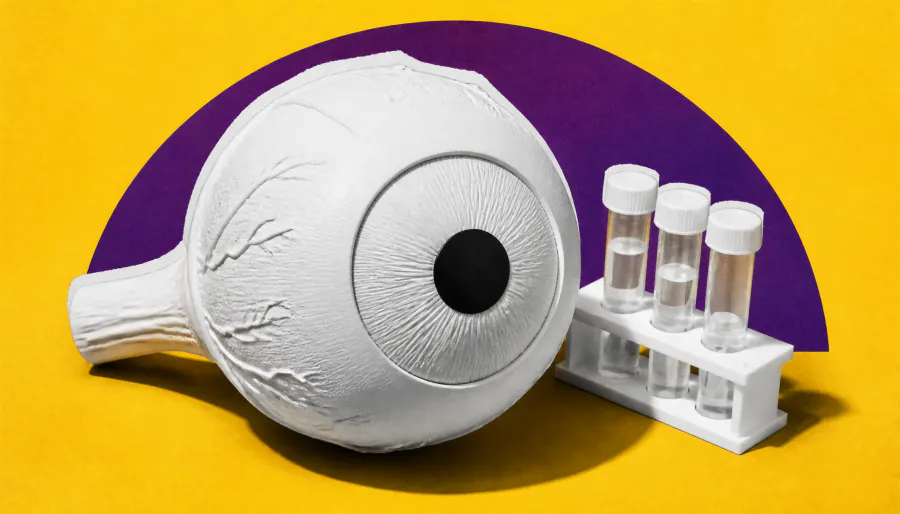
A new drug may protect vision after optic neuritis. Phase 2 ACUITY trial data show that privosegtor, added to standard steroids, significantly blunted early rises in two nerve-damage biomarkers — NfL and GFAP — compared to placebo. The findings bolster the case for privosegtor as a neuroprotective therapy, with a registrational trial now underway.
There's currently no approved therapy to protect the nerve cells responsible for vision after an acute optic neuritis (ON) episode — steroids help shorten attacks but don't prevent long-term damage. New biomarker data from the phase 2 ACUITY trial suggest that privosegtor, an investigational small molecule by Oculis, could change that.
Presented at MSToronto 2026, the analysis found that patients receiving privosegtor (3 mg/kg/day) alongside high-dose steroids had significantly smaller early increases in plasma neurofilament light chain (NfL) and glial fibrillary acidic protein (GFAP) — two markers of nerve and astrocyte injury — compared to placebo. GFAP levels even dropped below baseline in the privosegtor group, while remaining elevated in placebo patients through month 6, suggesting reduced reactive astrogliosis.
By the Numbers:
Why it matters: These biomarker findings complement earlier visual function and retinal structural data, strengthening the biological rationale for privosegtor as a neuroprotective agent. With FDA Breakthrough Therapy and EMA PRIME designations in hand, Oculis is now advancing the registrational PIONEER-1 trial — a significant step toward a first-ever approved therapy for optic neuritis.