Curie Brief
Turn on cookies to sign in
Signing in saves your progress to your Curie account. We can only do that with cookies on — turn them on to continue.
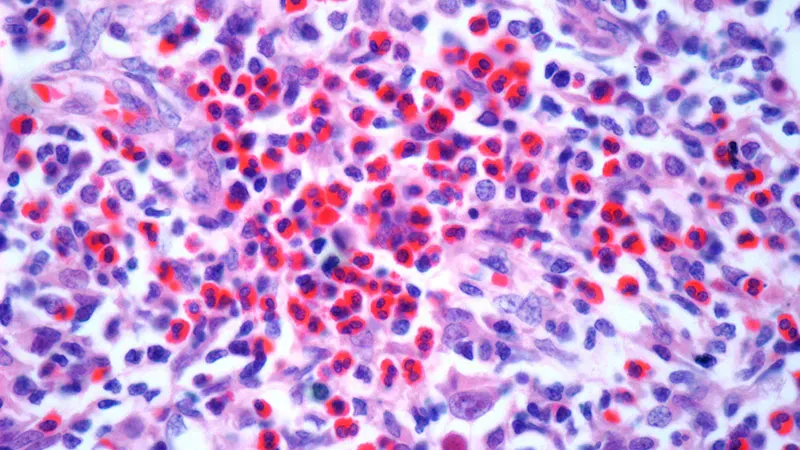
A new strategy for managing severe COPD could help patients use fewer steroids — safely. The COPERNICOS trial found that eosinophil-guided therapy (EGT) cut daily inhaled corticosteroid (ICS) doses by 28% compared to standard triple therapy, with no significant increase in severe exacerbations, pneumonia, or all-cause mortality over one year.
A new strategy for managing severe COPD could help patients use fewer steroids — safely.
The COPERNICOS trial enrolled 444 adults with severe or very severe COPD and tested whether adjusting inhaled corticosteroid (ICS) use based on blood eosinophil levels — a known biomarker for airway inflammation — could reduce steroid exposure without worsening outcomes. Participants were randomized to either an eosinophil-guided therapy (EGT) strategy, where ICS was switched on or off every 3 months based on eosinophil levels, or continued standard triple therapy.
The EGT group achieved a 28% reduction in daily ICS dose (502 µg vs. 696 µg budesonide equivalent) with no significant increase in severe exacerbations, pneumonia, or all-cause mortality over one year — a notable finding given that long-term ICS use is linked to serious side effects like pneumonia.
By the Numbers:
Why it matters: This trial is the first to show that EGT can meaningfully reduce cumulative ICS exposure in severe COPD patients without triggering worse outcomes — potentially offering clinicians a safer, more personalized approach to steroid management. Larger, blinded trials are still needed to confirm these findings.