Curie Brief
Turn on cookies to sign in
Signing in saves your progress to your Curie account. We can only do that with cookies on — turn them on to continue.
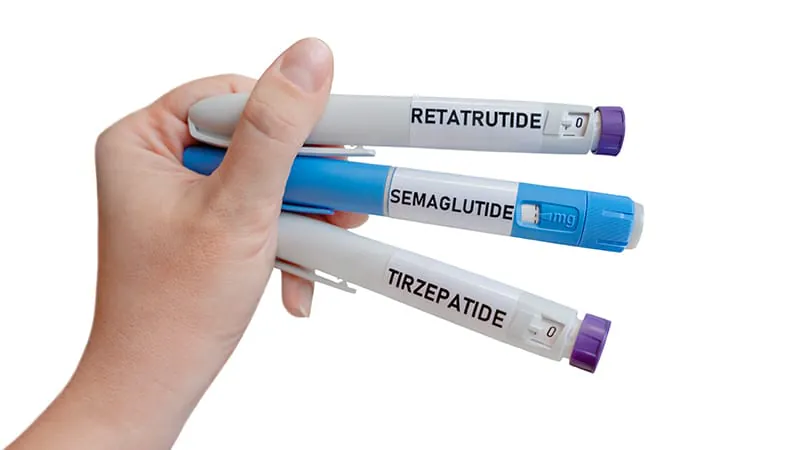
Obesity medications are now delivering weight loss once thought possible only through bariatric surgery — and that's a major shift. But according to Dr. Holly Wyatt at the Cardiometabolic Health Congress, this new era of treatment is generating six big unanswered questions around optimal weight targets, body composition, drug matching, discontinuation, lifestyle's role, and what "success" even means anymore.
Pharmaceutical treatments for obesity have officially changed the game. Speaking at the Cardiometabolic Health Congress in Boston, Dr. Holly Wyatt of the University of Alabama-Birmingham noted that GLP-1 receptor agonists and other next-generation medications are now producing weight loss comparable to bariatric surgery — far beyond what lifestyle modifications alone could ever achieve. But rather than closing the book on obesity treatment, this progress has opened a brand-new chapter of unanswered questions.
Dr. Wyatt outlined six key questions now facing clinicians: How much weight loss is optimal (not just maximal)? What exactly is being lost — fat or lean mass? Which patients need which drug? What happens when patients stop treatment? Does lifestyle still matter? And who defines treatment success? On discontinuation alone, data show that within 2 years, over 84% of patients without type 2 diabetes had stopped GLP-1 therapy — and weight typically returns when treatment ends.
Key Takeaways:
Why it matters: As the obesity drug landscape rapidly expands — with GLP-1s, dual agonists, triple agonists, and amylin analogs all entering the mix — clinicians need a new framework for care, not just new prescriptions.