Curie Brief
Turn on cookies to sign in
Signing in saves your progress to your Curie account. We can only do that with cookies on — turn them on to continue.
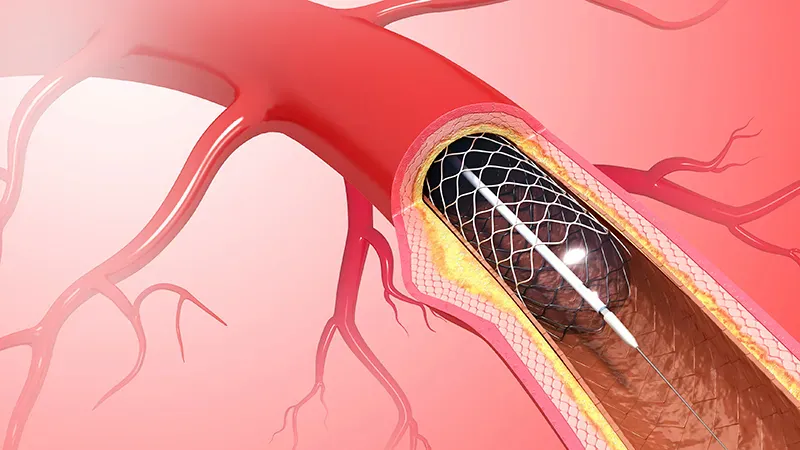
Not all coronary plaques are created equal. A post hoc analysis of the PREVENT trial found that patients with lipid-rich plaques faced more than twice the cardiac event risk compared to those with non-lipid-rich plaques. Crucially, adding preventive stenting (PCI) to standard medical therapy slashed that risk by 77% — a benefit that didn't extend to patients with non-lipid-rich plaques.
Not all coronary plaques are created equal, and a new analysis suggests that knowing a plaque's fat content could be the key to deciding who actually benefits from preventive stenting. Researchers analyzed data from the PREVENT trial — a randomized study of patients with non-flow-limiting vulnerable coronary plaques — to see whether lipid content changed the calculus on preventive percutaneous coronary intervention (PCI).
The findings were striking: patients with lipid-rich plaques had more than double the risk of cardiac events compared to those with non-lipid-rich plaques. But when preventive PCI was added to optimal medical therapy in the lipid-rich group, that elevated risk dropped dramatically — by 77%. Patients without lipid-rich plaques saw no meaningful benefit from the added procedure.
Why it matters: These results suggest that plaque composition — not just anatomy — should guide preventive PCI decisions. Combining intravascular imaging with lipid content analysis could help cardiologists target stenting to the patients most likely to benefit, potentially avoiding unnecessary procedures in lower-risk patients.