Curie Brief
Turn on cookies to sign in
Signing in saves your progress to your Curie account. We can only do that with cookies on — turn them on to continue.
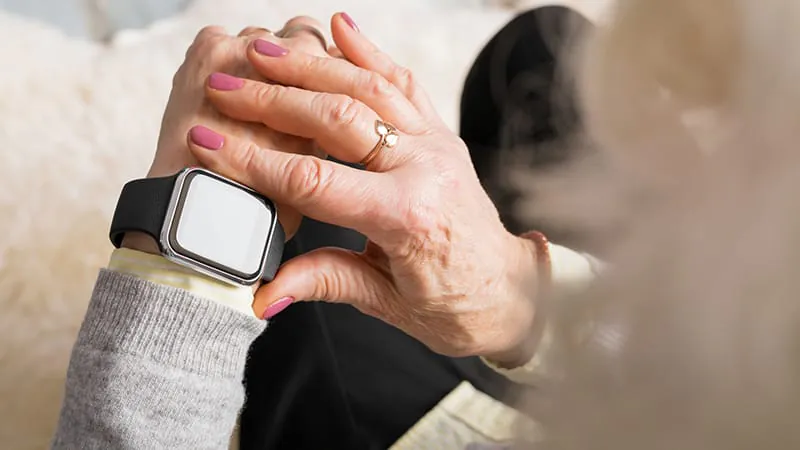
Patients are showing up to appointments armed with smartwatch heart data — and clinicians need to know what to do with it. A sports medicine expert breaks down when wearable heart data is trustworthy and when it isn't. The bottom line: treat wearable data as a starting point, never a diagnosis, and always correlate with symptoms and a proper exam.
Patients are showing up to appointments armed with heart rate graphs, variability scores, and spike alerts from their smartwatches — and clinicians need to know what to do with that data. At France's 19th National Congress on Sports Medicine and Traumatology, Dr. Stéphane Doutreleau of Grenoble Alpes University Hospital offered a practical framework for interpreting wearable device data in clinical settings.
The key issue is reliability. Chest strap ECG monitors remain the gold standard, while optical sensors in smartwatches (which use photoplethysmography, or PPG) are far more prone to error — especially during high-movement activities like running or cycling, where heart rate can be underestimated by dozens of beats per minute. Heart rate variability (HRV), another popular wearable metric, is only meaningful when measured at rest, under consistent conditions, and tracked over time — a single reading tells you very little.
Key Takeaways:
Why it matters: As wearables become ubiquitous, clinicians who can critically interpret — rather than ignore or over-trust — this data will be better equipped to catch real cardiac events early and avoid unnecessary alarm over measurement noise.