Curie Brief
Turn on cookies to sign in
Signing in saves your progress to your Curie account. We can only do that with cookies on — turn them on to continue.
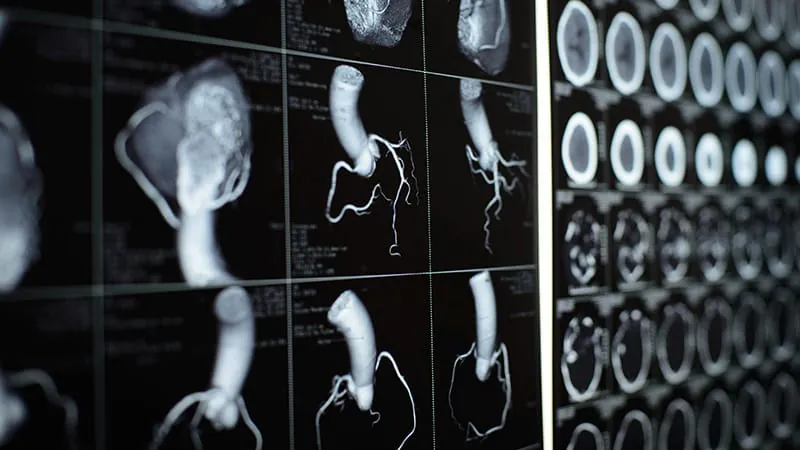
A cardiac imaging tool that estimates blood flow through coronary arteries could help predict future heart attacks and cardiovascular death more accurately than traditional risk factors alone. A large UK study of nearly 8,000 patients found that lower FFR-CT values were linked to significantly higher risks of heart attack, cardiovascular death, and the need for revascularization over three years. The findings suggest FFR-CT could become a powerful addition to routine cardiac workups.
A measure derived from coronary CT angiography — called FFR-CT (fractional flow reserve) — may do more than just detect blockages. A large UK study published in Circulation found that lower FFR-CT values were independently associated with a significantly higher risk of heart attack, cardiovascular death, and the need for revascularization over a median follow-up of about three years.
The retrospective study (FISH&CHIPS) analyzed 7,836 patients across 27 hospitals in England who underwent coronary CT angiography for suspected coronary artery disease between 2017 and 2020. Crucially, the associations held even after adjusting for standard cardiovascular risk factors and the degree of arterial narrowing seen on CT — suggesting FFR-CT adds meaningful prognostic information beyond what clinicians already have.
Why it matters: FFR-CT is already used to guide treatment decisions, but this study suggests it can also serve as a powerful prognostic tool — potentially helping clinicians identify high-risk patients earlier and tailor preventive strategies before a cardiac event occurs.