Curie Brief
Turn on cookies to sign in
Signing in saves your progress to your Curie account. We can only do that with cookies on — turn them on to continue.
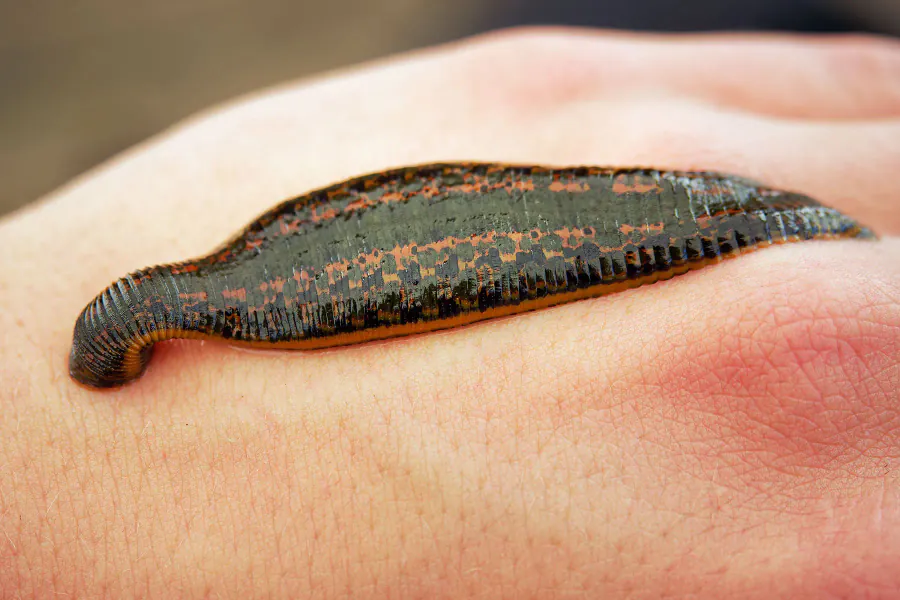
Leech therapy has a wild 2,000-year history — from ancient bloodletting cure-all to modern surgical tool. Once nearly wiped out by overharvesting and discredited during cholera epidemics, leeches made a remarkable comeback. Today, the FDA recognizes their use in reconstructive and plastic surgery, and they're gaining renewed interest in integrative medicine.
Leech therapy has been around for over 2,000 years, evolving from a go-to remedy for nearly every ailment to a scientifically validated tool in modern medicine. At the height of their popularity in 19th-century Europe, millions of leeches were harvested annually — France alone imported 33 million a year — fueling a booming transnational trade. French physician François-Joseph-Victor Broussais was a major driver, prescribing leeches to treat everything from typhus to dysentery. But their overuse during the cholera epidemic of the 1830s, combined with dwindling wild populations, led to a sharp decline in their medical use by the end of the 19th century.
Their modern revival came in 1985, when American plastic surgeon Joseph Upton used leeches to successfully save a reimplanted ear in a 5-year-old boy. The FDA formally approved leeches as a medical device for reconstructive and plastic surgery in 2004. Today, they're also being explored for osteoarthritis, venous disorders, and chronic pain, and remain part of Arabic, Ayurvedic, and East Asian traditional medicine.
Quick Facts:
Why it matters: Leech therapy's journey from ancient remedy to FDA-approved medical device is a reminder that some traditional treatments can withstand scientific scrutiny — and that medicine's history is rarely a straight line.