Curie Brief
Turn on cookies to sign in
Signing in saves your progress to your Curie account. We can only do that with cookies on — turn them on to continue.
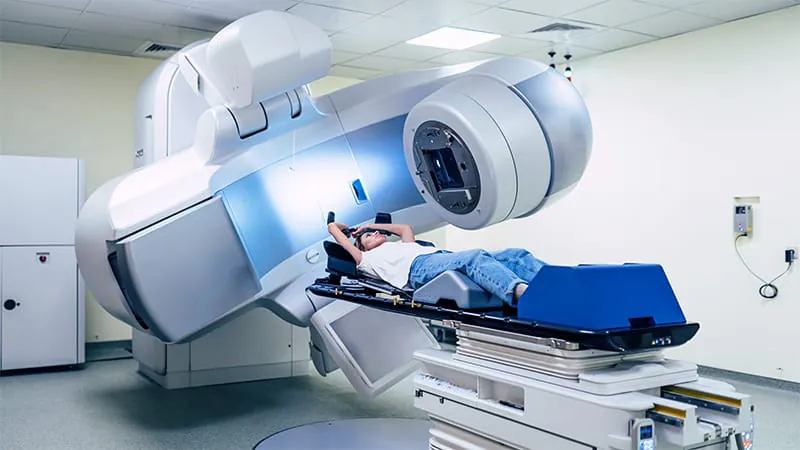
Long-term data from a Russian trial suggest low-dose radiation therapy may slow knee osteoarthritis progression, cutting disability rates by 67% compared to supplements alone. Experts are pushing back, calling the open-label, single-institution study riddled with "fatal flaws" — including no sham control and a condition highly susceptible to placebo effects. Researchers are now calling for a rigorous US-based sham-controlled trial to settle the debate.
Long-term data from a Russian randomized trial, presented at the ASTRO 2026 Annual Meeting, suggest that low-dose radiation therapy (RT) combined with glucosamine and chondroitin supplements may significantly slow the progression of early knee osteoarthritis (OA). Patients who received low-dose RT had a 67% lower rate of disability, fewer knee replacements, and less MRI-confirmed joint damage over nearly 12 years of follow-up compared to those on supplements alone.
But not everyone is convinced. Critics, including rheumatologist Joel A. Block, MD, of Rush University Medical Center, have labeled the study's limitations "fatal flaws." The trial was open-label with no sham control — a major concern given that OA pain is notoriously susceptible to placebo effects, with placebo response rates often exceeding 40%. The study population also skewed toward very mild disease, raising questions about the generalizability of the disability rates observed.
Why it matters: Low-dose RT has been used in Europe for decades to manage joint pain, but high-quality evidence remains sparse. These findings — despite their limitations — are reigniting calls for a rigorous, sham-controlled US multicenter trial that could finally determine whether this therapy can genuinely alter the course of knee OA.