Curie Brief
Turn on cookies to sign in
Signing in saves your progress to your Curie account. We can only do that with cookies on — turn them on to continue.
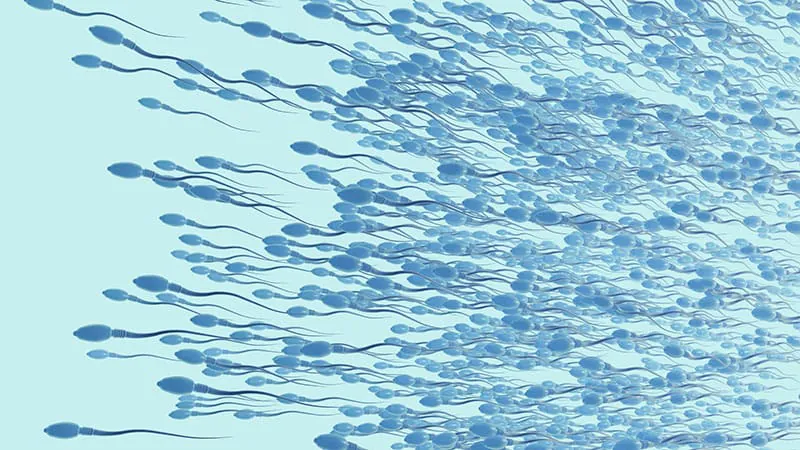
Scientists have taken a major step toward creating human sperm from stem cells, offering hope to men with azoospermia who currently have no path to biological parenthood. A new study published in Cell Stem Cell successfully produced spermatogonia-like cells — the precursors to sperm — that closely resemble those found naturally in human testes. Researchers say functional sperm may still be 5–10+ years away.
Around 1% of men — roughly 1.7 million in the US — have azoospermia, a condition where no sperm is present in their ejaculate. For about half of them, sperm can be retrieved directly from the testes, but for the other half, there's currently no option for biological parenthood. A new study published in Cell Stem Cell (July 2026) is bringing that possibility closer, with researchers successfully generating spermatogonia-like cells from stem cells — cells that closely resemble the sperm stem cells naturally found in human testes.
Led by Dr. Kotaro Sasaki at the University of Pennsylvania, the team combined human germ cell precursors with mouse fetal testicular cells to form "mini testes," which were then transplanted under the kidney capsules of immunodeficient mice. This allowed the cells to survive, mature, and form 3D structures — ultimately producing spermatogonia-like cells nearly indistinguishable from natural human spermatogonia at the RNA and DNA level.
Key Takeaways:
Why it matters: For men with no viable sperm, this research could one day mean the difference between biological parenthood and none at all. Researchers estimate functional lab-grown sperm could exist within 5 years — but clinical use in humans is likely 10+ years away.