Curie Brief
Turn on cookies to sign in
Signing in saves your progress to your Curie account. We can only do that with cookies on — turn them on to continue.
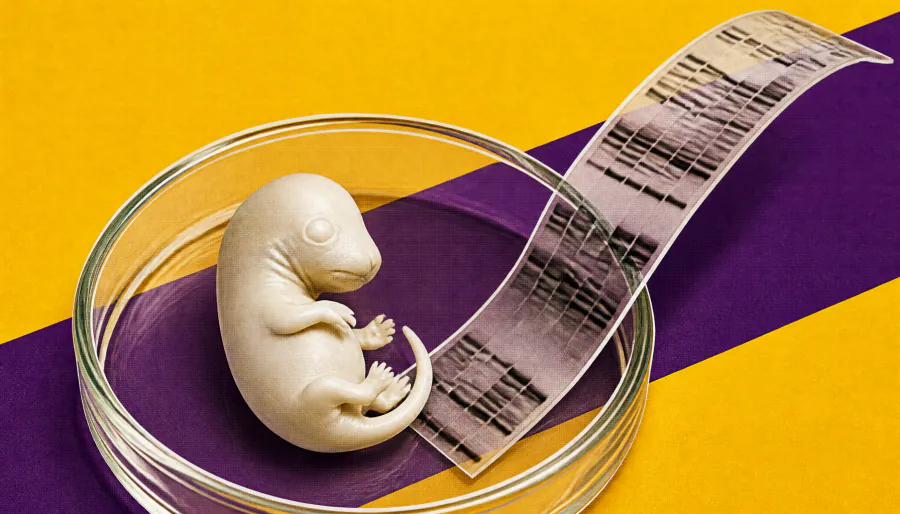
Scientists used a tool called DNA Typewriter to reconstruct the complete cell lineage of a developing mouse embryo — from the very first cell division to full organ formation. The technology writes permanent, ordered marks directly onto a cell's DNA each time it divides, creating a readable history. The findings shed light on how organs form and could advance research into birth defects, cancer, and stem cell therapies.
Scientists at the University of Washington and Dartmouth College used a genomic recording tool called DNA Typewriter to reconstruct the complete cell lineage of a developing mouse embryo — tracking every cell division from the fertilized egg through 13.5 days of development, when major organs have formed. The study, published in Science, marks a major leap forward from older lineage-tracing methods that were limited by DNA damage, disordered markings, and short recording windows.
The technology works by inserting a specially designed "tape" into the mouse genome. Each time a cell divides, a new character is written in sequence onto the DNA — never overwriting previous entries — creating a permanent, ordered log of the cell's history. Shared markings across cells reveal which ones share a common ancestor.
Key Takeaways:
Why it matters: Understanding how a single cell becomes a full organism — and when each cell "picks its job" — could transform our knowledge of birth defects, neurodevelopmental conditions, and cancer, with direct implications for engineering stem cells for therapeutic use.