Curie Brief
Turn on cookies to sign in
Signing in saves your progress to your Curie account. We can only do that with cookies on — turn them on to continue.
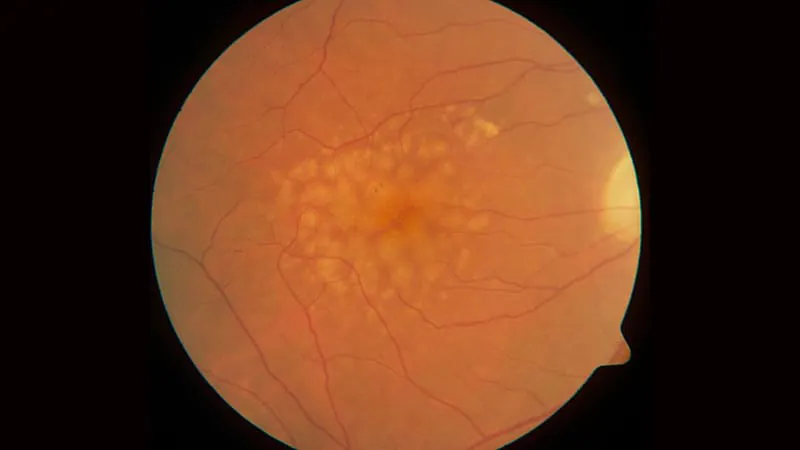
Not all drusen are created equal. A new study of 450 eyes with wet AMD found that cuticular drusen were linked to significantly higher rates of macular atrophy compared to soft drusen — but drusen type didn't affect how well patients responded to anti-VEGF injections. The findings won't shake up treatment protocols, but they could help clinicians better risk-stratify patients and have more informed conversations about disease progression.
A retrospective study of 450 previously untreated eyes with neovascular age-related macular degeneration (nAMD), presented at EURETINA 2026 in Vienna, found that drusen type is meaningfully linked to macular atrophy risk — even if it doesn't predict how well a patient will respond to anti-VEGF therapy. Researchers at Tel Aviv Medical Center used AI to measure retinal fluid volumes and manually classified drusen as soft, cuticular, or subretinal drusenoid deposits.
The key finding: cuticular drusen were associated with a substantially higher rate of macular/geographic atrophy (51%) compared to soft drusen (30%). Treatment response at 6 months, however, did not differ significantly by drusen type — meaning current anti-VEGF protocols are unlikely to change based on these results.
Key Takeaways:
Why it matters: While these findings won't alter treatment decisions today, they give clinicians a new lens for risk-stratifying patients. Those with cuticular drusen may warrant closer monitoring and earlier conversations about progression to geographic atrophy — a condition with its own emerging treatment landscape.