Curie Brief
Turn on cookies to sign in
Signing in saves your progress to your Curie account. We can only do that with cookies on — turn them on to continue.
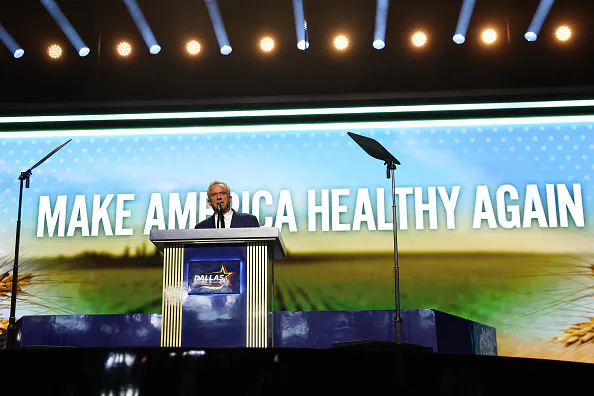
HHS Secretary RFK Jr. ignited a firestorm by claiming AI can give patients medical advice superior to any physician. Six major medical societies, including the AMA, swiftly pushed back, insisting that doctors — not algorithms — must remain central to clinical care. The debate is heating up as the Trump administration accelerates AI's role across the healthcare system.
At the Make America Healthy Again (MAHA) Summit, HHS Secretary Robert F. Kennedy Jr. declared that AI could provide patients a second opinion "much better informed than any doctor in the country." His remarks came as the Trump administration is actively pushing AI to the forefront of healthcare, with the Centers for Medicare & Medicaid Services naming clinical AI a top strategic priority.
The medical establishment pushed back swiftly. Six major medical societies — including the AMA, the American Academy of Family Physicians, and the American College of Surgeons — issued a joint statement warning that framing AI as superior to physicians "diminishes physician expertise and risks undermining patients' trust." They emphasized that medicine requires human judgment, empathy, and contextual understanding that AI cannot replicate.
The controversy is unfolding against a broader backdrop of intensifying debate about AI's role in medicine.
Key Takeaways:
Why it matters: The question of how — and how much — AI should assist or replace physicians is no longer theoretical. With federal policy, corporate investment, and medical society pushback all colliding, the rules of the road for clinical AI are being written right now.