Curie Brief
Turn on cookies to sign in
Signing in saves your progress to your Curie account. We can only do that with cookies on — turn them on to continue.
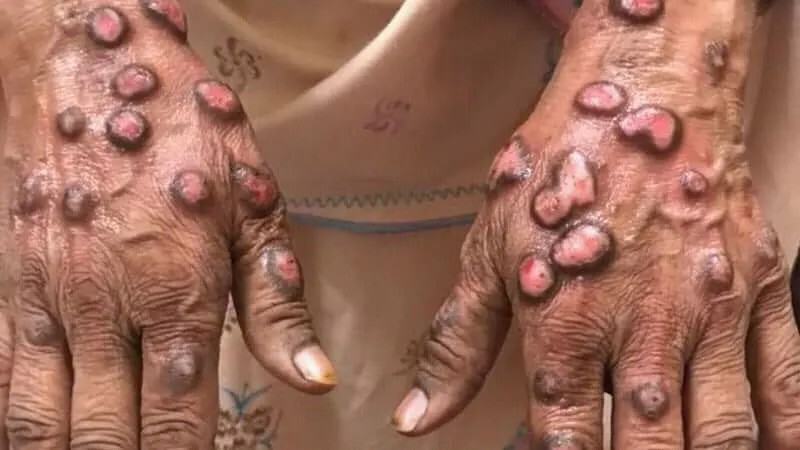
A new itch-fighting drug is turning heads in dermatology. Oturkibart, a monoclonal antibody targeting the IL-4 receptor, helped nearly 75% of prurigo nodularis patients achieve significant itch relief at 24 weeks — climbing to 95.5% by week 52. The phase 3 trial also showed a favorable safety profile, with notably lower rates of conjunctivitis compared to the already-approved dupilumab.
A new contender in the treatment of prurigo nodularis (PN) — a chronic, intensely itchy skin condition — is showing impressive results. In a multicenter, placebo-controlled phase 3 trial presented at the EADV 2026 Congress, oturkibart, a humanized monoclonal antibody that blocks both IL-4 and IL-13 signaling, delivered deep and sustained itch relief in patients whose symptoms were inadequately controlled by topical corticosteroids.
The trial enrolled 412 patients randomized to oturkibart (450 mg subcutaneously every 2 weeks) or placebo. By week 52 — including an open-label extension — nearly all patients on oturkibart achieved meaningful itch relief, and over two-thirds showed significant skin clearance. Even "slow responders" who hadn't met the primary endpoint at 24 weeks largely caught up by week 52.
By the Numbers:
Why it matters: If approved, oturkibart would become only the second anti-IL-4 receptor monoclonal antibody for PN, joining dupilumab (Dupixent). Its notably lower conjunctivitis rate could make it a compelling alternative, though head-to-head trials are still needed to draw firm conclusions.