Curie Brief
Turn on cookies to sign in
Signing in saves your progress to your Curie account. We can only do that with cookies on — turn them on to continue.
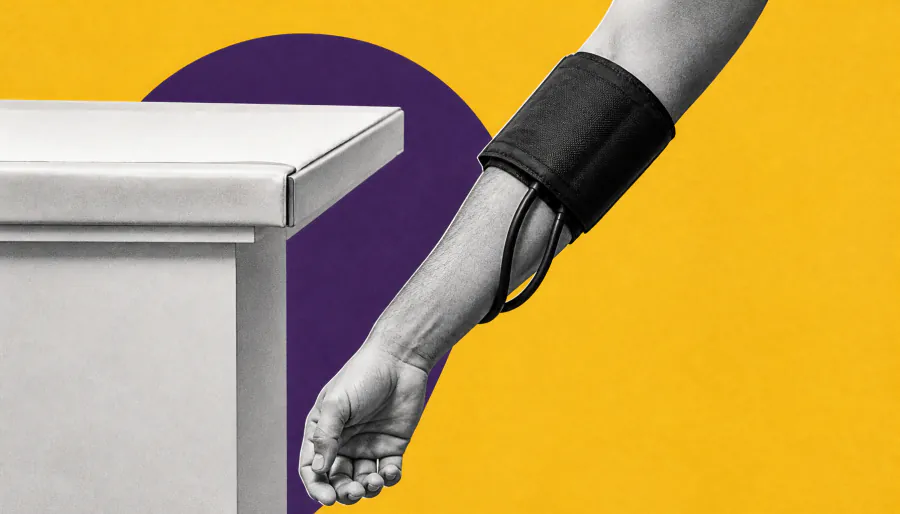
Something as simple as where you rest your arm could make your blood pressure look dangerously high. A Johns Hopkins study found that leaving your arm unsupported at your side can inflate systolic readings by 6.5 mmHg — enough to push someone from a normal range into Stage 2 hypertension. Researchers say clinicians need to follow measurement guidelines more closely, and patients should speak up.
A new Johns Hopkins Medicine study published in JAMA Internal Medicine reveals that something as routine as arm position during a blood pressure (BP) check can meaningfully distort results — and potentially lead to a misdiagnosis of hypertension. Researchers compared three seated arm positions — arm on a desk, arm on the lap, and arm hanging unsupported at the side — and found that the two most commonly used clinical positions both overestimated BP compared to the recommended desk-supported position.
Despite clear guidelines from the American Heart Association calling for the arm to be supported at mid-heart level on a desk or table, patients are frequently measured while sitting on exam tables with little or no arm support — a gap between recommendation and practice that this study puts in sharp focus.
By the Numbers
Why it matters: Nearly half of U.S. adults have elevated blood pressure, making accurate measurement critical. A faulty reading doesn't just cause anxiety — it can trigger unnecessary medication or, conversely, leave real hypertension undetected. Researchers urge both clinicians and patients to take proper arm positioning seriously.