Curie Brief
Turn on cookies to sign in
Signing in saves your progress to your Curie account. We can only do that with cookies on — turn them on to continue.
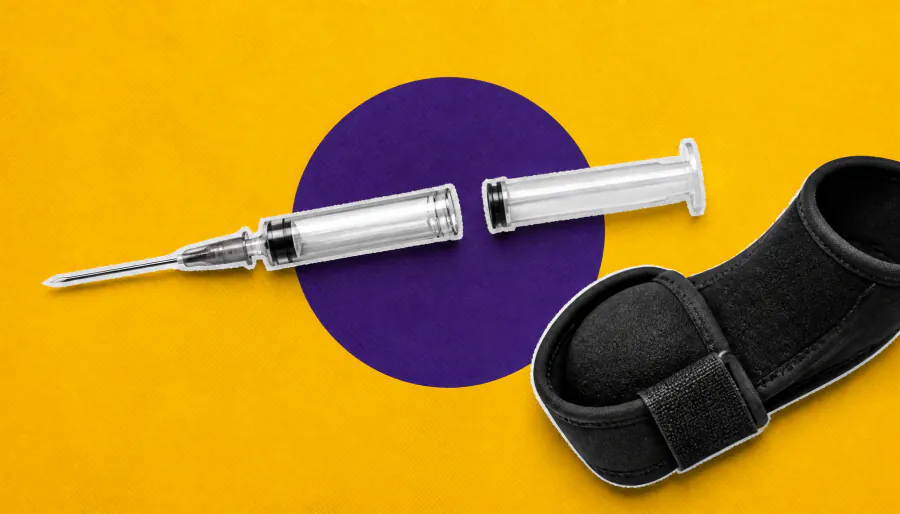
Platelet-rich plasma (PRP) injections may not live up to the hype for lateral epicondylitis (tennis elbow). A new systematic review and meta-analysis of six randomized controlled trials found PRP offered no significant advantage over placebo in reducing pain or improving function at any time point measured. Researchers note the evidence remains inconsistent, though PRP might still hold value for select patient groups.
Platelet-rich plasma (PRP) injections have long been considered a promising non-invasive option for lateral epicondylitis — the painful condition commonly known as tennis elbow. But a new systematic review and meta-analysis presented at the International Congress on Shoulder and Elbow Surgery is challenging that assumption. Researchers analyzed six randomized controlled trials involving 355 patients and found that PRP offered no statistically significant improvement in pain or function compared to placebo at any follow-up point — 4 weeks, 8–12 weeks, or 24–26 weeks. Complication rates were also similar between the two groups.
Lead researcher Dr. Ramon Sampaio Souza Santos acknowledged the study's limitations — including variability in PRP formulations, application techniques, and limited quality-of-life reporting — and noted that meta-analyses reflect evolving, sometimes inconsistent evidence rather than definitive conclusions. He added that PRP may still hold value in specific subgroups, such as high-performance athletes or treatment-resistant cases.
By the Numbers:
Why it matters: For clinicians managing tennis elbow, this study adds to growing skepticism around PRP's routine use. The current evidence doesn't support it as a go-to option over placebo — a meaningful signal for both clinical practice and patient counseling.