Curie Brief
Turn on cookies to sign in
Signing in saves your progress to your Curie account. We can only do that with cookies on — turn them on to continue.
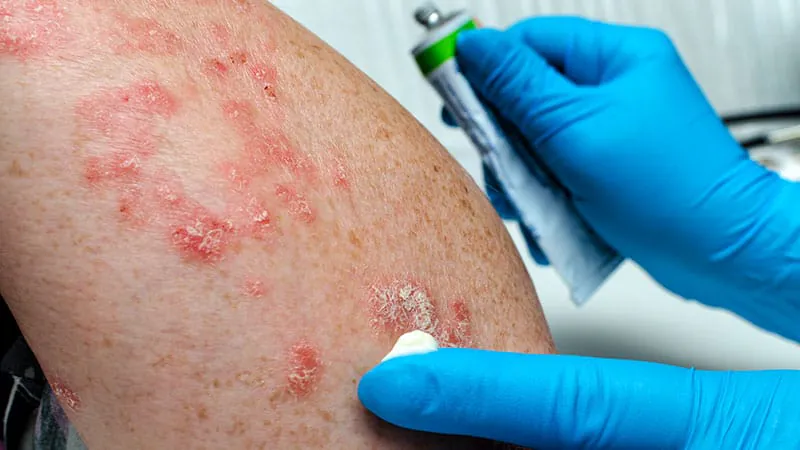
A new IL-23 inhibitor is turning heads in psoriasis treatment. ORKA-001, a long-acting monoclonal antibody, helped over 71% of patients achieve complete skin clearance at 28 weeks — six months after their last injection. The safety profile looks clean, with no serious adverse events or injection-site reactions reported so far.
A new long-acting monoclonal antibody for moderate-to-severe plaque psoriasis is delivering impressive and durable results. In the phase 2a EVERLAST-A trial, ORKA-001 — an IL-23p19 inhibitor developed by Oruka Therapeutics — achieved complete skin clearance (PASI 100) in 71.4% of patients at 28 weeks, notably six months after the last dose was administered. Response rates also continued to improve over time, suggesting the drug's extended half-life may be a key differentiator.
The safety profile remains reassuring. Treatment-emergent adverse events were comparable to placebo, with upper respiratory tract infections being the most common side effect (8% between weeks 16–28). No serious adverse events, injection-site reactions, or pharmacokinetic impact from antidrug antibodies have been observed.
By the Numbers:
Why it matters: With only two doses needed in the first month, ORKA-001's extended half-life could offer a meaningful convenience advantage over existing biologics — potentially reshaping long-term psoriasis management. Full 52-week data are expected in December 2026.