Curie Brief
Turn on cookies to sign in
Signing in saves your progress to your Curie account. We can only do that with cookies on — turn them on to continue.
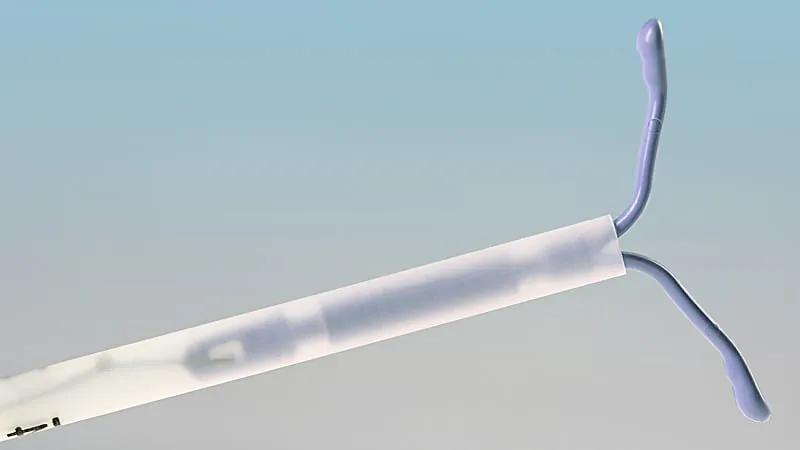
IUD insertion doesn't have to hurt as much. Two new JAMA studies show that intrauterine mepivacaine significantly cuts pain during IUD placement, and when IV sedation is routinely offered, 1 in 5 patients choose it. Experts say it's time to move beyond a one-size-fits-all approach and offer patients a real menu of pain management options.
IUD insertion pain has long been dismissed or undertreated — but two new studies published in JAMA are pushing for change. The first, a randomized controlled trial conducted across 11 Swedish clinics, found that intrauterine instillation of the local anesthetic mepivacaine meaningfully reduced pain compared to placebo in 370 nulliparous women. Patients who received mepivacaine were also less likely to experience vasovagal reactions and more likely to say they'd choose an IUD again.
The second study took a different angle: when IV moderate sedation (fentanyl + midazolam) was routinely offered at family planning clinics in Massachusetts, about 1 in 5 patients opted for it — suggesting demand for stronger pain control is higher than previously assumed. Those who chose sedation were more likely to be nulliparous, have anxiety or depression, or have a history of pelvic pain.
By the Numbers:
Why it matters: Pain during IUD placement is a real barrier to contraceptive access. These findings support offering patients a range of evidence-based options — from local anesthetics to IV sedation — rather than assuming discomfort is simply part of the process.