Curie Brief
Turn on cookies to sign in
Signing in saves your progress to your Curie account. We can only do that with cookies on — turn them on to continue.
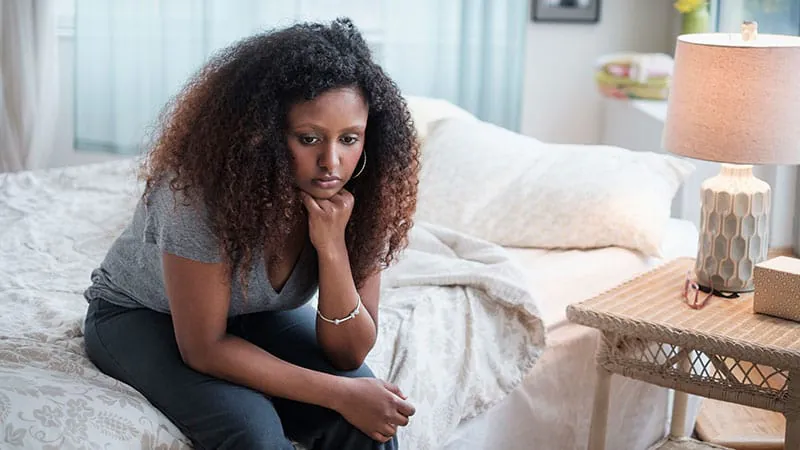
Women living with HIV for 15+ years were nearly four times more likely to experience depression during COVID than shorter-term survivors, a new study finds. A key factor? Self-silencing — the habit of suppressing thoughts and emotions to maintain relationships. The findings call for HIV care models that go beyond lab results to address mental health and emotional well-being.
A new study published in AIDS Care reveals a significant mental health burden among minority women living with HIV during the COVID pandemic. African American/Black and Hispanic/Latina women who had been living with HIV for 15 years or more had nearly four times the odds of depression compared to those diagnosed more recently — and the association was even stronger among those who had previously contracted COVID-19.
The study, led by researchers at the University of Southern California, surveyed 85 women receiving care at a public HIV clinic in Los Angeles between 2021 and 2023. A notable finding: self-silencing — suppressing one's thoughts and feelings to maintain relationships — was strongly tied to depression, particularly in long-term survivors. Meanwhile, 33% of participants showed low resilience, and 36% reported poor adherence to antiretroviral therapy.
By the Numbers:
Why it matters: These findings highlight that long-term HIV survival comes with compounding psychological challenges that standard clinical care often misses. Researchers are calling for trauma-informed, culturally responsive HIV care models that address emotional expression and mental health — not just viral loads.