Curie Brief
Turn on cookies to sign in
Signing in saves your progress to your Curie account. We can only do that with cookies on — turn them on to continue.
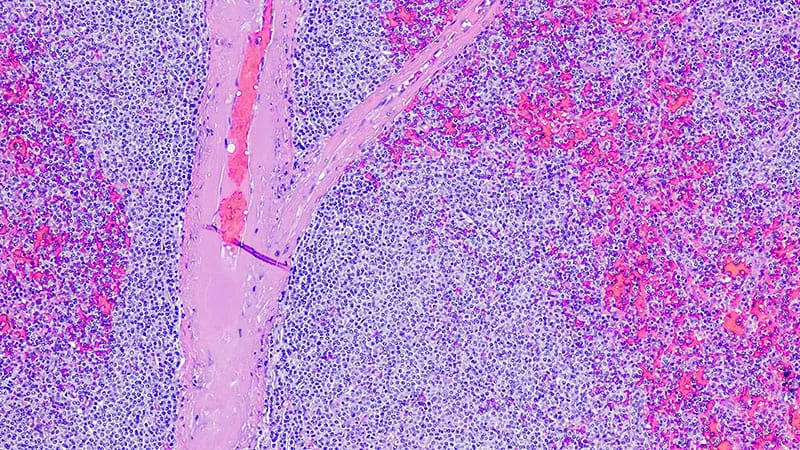
A new retrospective study finds that allogeneic hematopoietic stem cell transplantation (allo-HSCT) is "surprisingly effective and potentially curative" for hepatosplenic T-cell lymphoma — a rare and deadly cancer. Over half of patients who received allo-HSCT were still alive at 3 years, even some who had failed chemotherapy. Autologous transplant, however, carried a 50% relapse rate by year three.
Hepatosplenic T-cell lymphoma is one of the most aggressive and difficult-to-treat blood cancers, with standard chemotherapy regimens like CHOP offering poor outcomes and most patients dying within months of diagnosis. A large retrospective study published in The Lancet Haematology — drawing on registries from 64 centers across Europe, China, and South Korea — now offers some of the strongest evidence yet that allo-HSCT can meaningfully change the prognosis for these patients.
Among 94 patients who underwent allo-HSCT, more than half were alive at 3 years — a striking result given how refractory this disease typically is. Notably, even patients who had not achieved remission before transplant showed long-term survival, suggesting a meaningful graft-versus-lymphoma effect. By contrast, autologous HSCT carried a 50% relapse rate at 3 years, leading researchers to recommend it only for patients ineligible for allo-HSCT who achieve a complete response.
By the Numbers:
Why it matters: For a disease with virtually no standard of care and grim survival odds, these findings give clinicians actionable guidance: pursue allo-HSCT early in eligible patients, and reserve auto-HSCT as a fallback — not a first choice.