Curie Brief
Turn on cookies to sign in
Signing in saves your progress to your Curie account. We can only do that with cookies on — turn them on to continue.
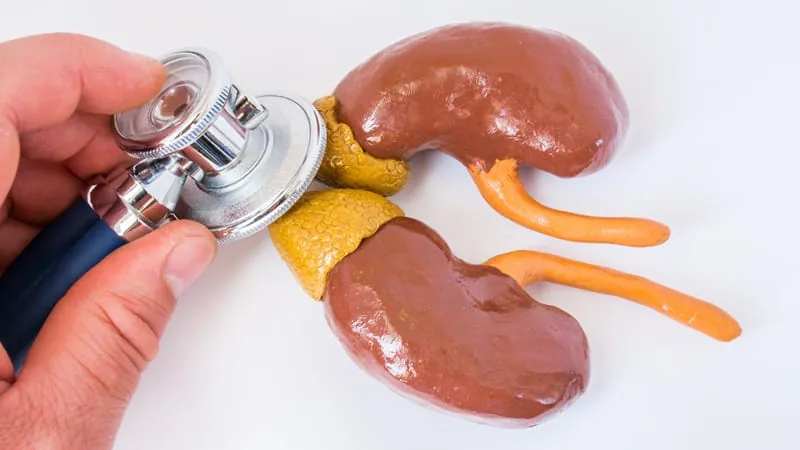
Nearly 1 in 4 patients with hard-to-control type 2 diabetes may have an overlooked culprit — excess cortisol. The CATALYST study found that 24% of patients with refractory T2D, central obesity, and severe hypertension had occult hypercortisolism. Catching it early could change the entire treatment approach.
If a patient's type 2 diabetes (T2D) isn't responding to metformin, an SGLT2 inhibitor, and a GLP-1 agonist — and they also have central obesity and hard-to-control blood pressure — it may be time to look beyond the pancreas. New findings from the CATALYST study suggest that occult hypercortisolism (excess cortisol flying under the radar) could be the hidden driver in a significant share of these cases.
Published in Diabetes Care, the study screened over 1,000 patients with poorly controlled T2D and found that nearly 24% of those fitting this metabolic profile tested positive for occult hypercortisolism via an overnight dexamethasone suppression test. Diagnosis requires at least two confirmatory tests, and once confirmed, measuring ACTH levels helps pinpoint whether the source is adrenal (simpler to treat surgically) or pituitary (far more complex). For non-surgical candidates, mifepristone — an FDA-approved glucocorticoid receptor blocker — reduced A1c by 1.3% and body weight by ~5 kg over 24 weeks, though a 46% discontinuation rate due to side effects remains a concern.
Key Takeaways:
Why it matters: Undiagnosed hypercortisolism keeps diabetes uncontrolled no matter how many medications are added. Identifying it opens the door to targeted — and potentially curative — treatment.