Curie Brief
Turn on cookies to sign in
Signing in saves your progress to your Curie account. We can only do that with cookies on — turn them on to continue.
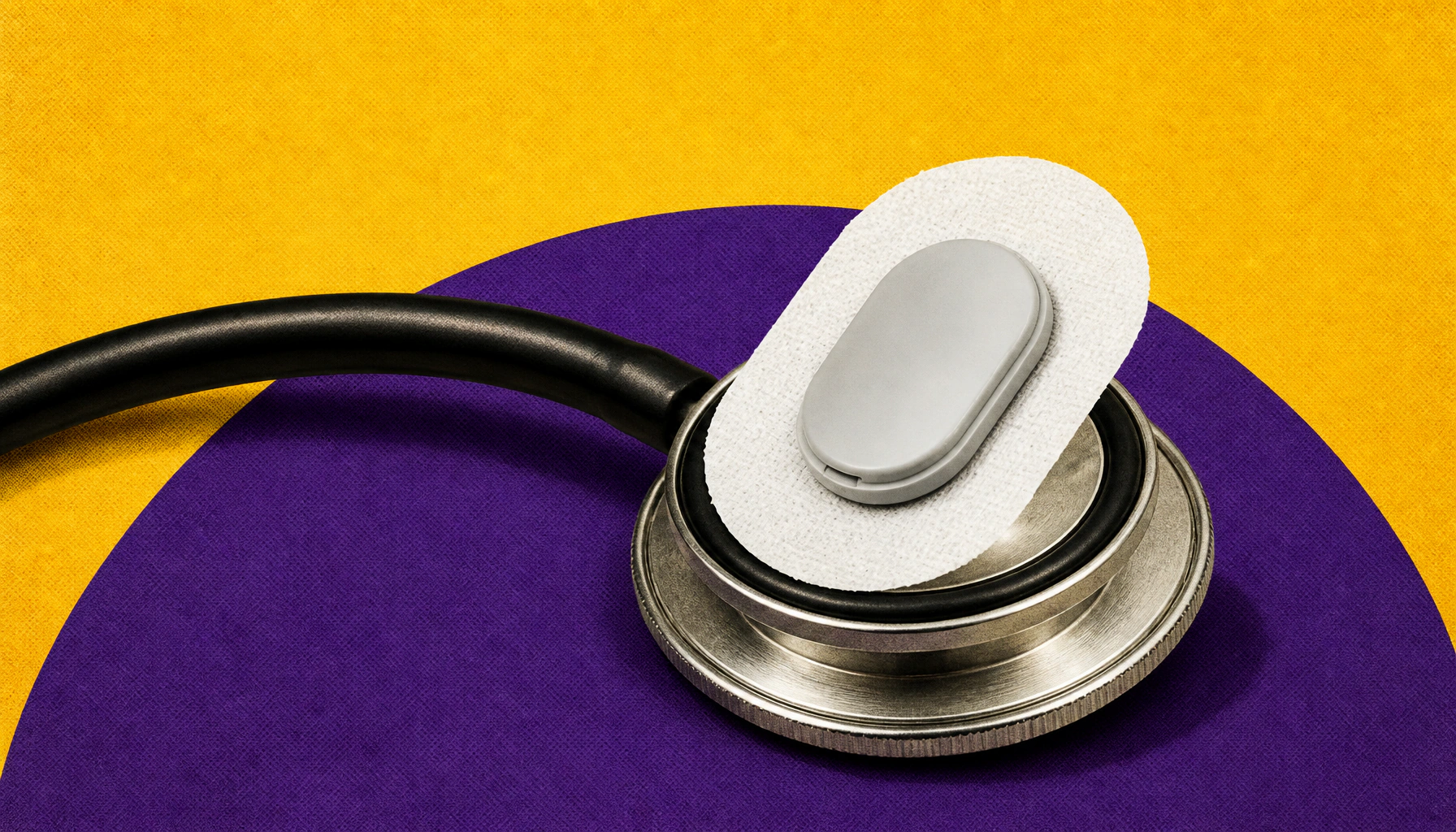
CGM is making its way into hospital ICUs, and early data suggest it's a win on multiple fronts. A trial at The Ohio State University found that ICU patients using CGM spent significantly more time in healthy glucose ranges compared to historical controls. The hospital is now set to become the first U.S. health system to adopt CGM as standard of care — entirely off-label.
Inpatient glucose management has long been a weak spot in hospital care, but continuous glucose monitoring (CGM) could be the fix. A trial at The Ohio State University (OSU) Wexner Medical Center enrolled 100 ICU patients using the Dexcom G6 CGM and compared their outcomes to historical controls. The results were clear: CGM users spent more time in healthy glucose ranges and far less time in dangerous hyperglycemic territory — all while saving nursing time and cutting costs.
Nurses were also strong supporters of the technology. In a separate study of 70 nurses conducted with Emory University, 92% said CGM reduced their workload, and 97% wanted to keep using it. The technology also gave nurses an average 10-minute heads-up before urgent low glucose events, allowing for faster intervention.
OSU is now on track to implement CGM as standard of care in its ICU by November — making it the first U.S. health system to do so off-label, after regulatory changes removed prior emergency use authorization coverage.
By the Numbers:
Why it matters: If CGM can be scaled across hospital ICUs, it could meaningfully improve glycemic outcomes, reduce nurse burden, and lower costs — a rare trifecta in healthcare innovation.