Curie Brief
Turn on cookies to sign in
Signing in saves your progress to your Curie account. We can only do that with cookies on — turn them on to continue.
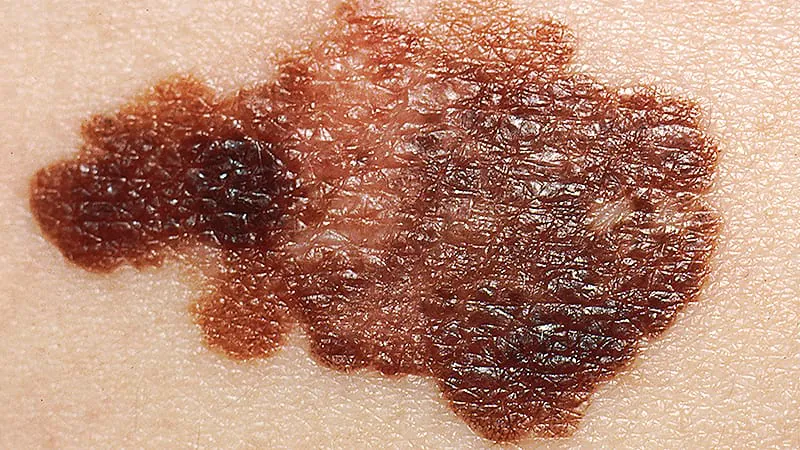
A Danish study found that adjuvant anti-PD-1 therapy (nivolumab or pembrolizumab) was linked to meaningfully better 5-year survival in matched patients with resected stage III melanoma — an 8.6 percentage point improvement. But at the full population level, that benefit disappears. The findings highlight the complexity of translating individual treatment gains into real-world, population-wide impact.
A large Danish nationwide cohort study compared outcomes in patients with resected stage III cutaneous melanoma before and after the rollout of adjuvant anti-PD-1 therapy (nivolumab or pembrolizumab). When researchers used propensity score matching to create comparable groups, those who received adjuvant immunotherapy showed meaningfully better 5-year overall survival than untreated patients. However, when looking at the full pre- and post-cohort populations — without matching — no survival difference was detected, suggesting that real-world factors like patient selection and evolving treatment protocols may be complicating the picture.
The study, published in the Journal of the European Academy of Dermatology & Venereology, followed over 1,000 patients across two time periods, with median follow-up exceeding five years in both groups. Notably, other-cause mortality was lower in treated patients, raising flags about residual confounding that could be influencing the apparent benefit.
By the Numbers:
Why it matters: These findings underscore that individual-level benefits of adjuvant immunotherapy don't automatically translate to population-wide gains. Until more mature trial data and extended real-world studies are available, clinicians are urged to make carefully individualized treatment decisions for stage III melanoma patients.