Turn on cookies to sign in
Signing in saves your progress to your Curie account. We can only do that with cookies on — turn them on to continue.
Densely packed DNA doubles as a sunscreen for developing embryos. Researchers at the University of Basel found that tightly coiled, inactive DNA migrates to the edge of the cell nucleus, forming a protective barrier against UV radiation. The timing of this shield is controlled by nuclear pores — and it kicks in right around when embryos leave the safety of their mother's body.
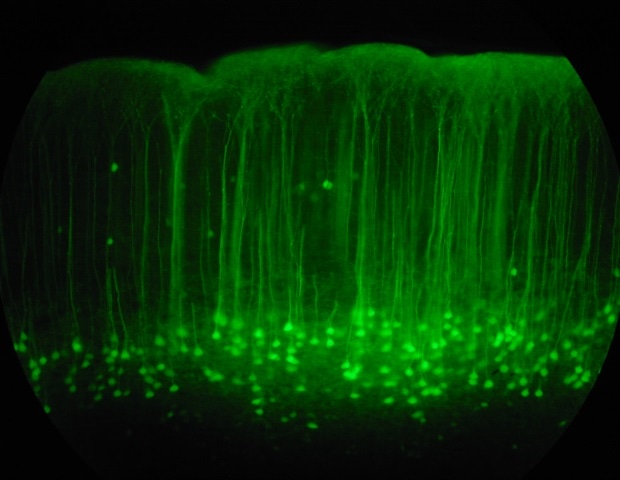
Researchers at the University of Basel have uncovered a surprising dual role for heterochromatin — the tightly packed, largely inactive regions of DNA — in developing embryos. Beyond regulating gene activity, this dense DNA accumulates at the outer edge of the cell nucleus, forming a physical shield against harmful UVB radiation. The discovery was made studying C. elegans roundworm embryos.
The key to timing? Nuclear pores. In early embryos, the nuclear envelope is densely packed with these tiny molecular gateways, leaving no room for heterochromatin to settle at the periphery. As development progresses and pore density decreases, heterochromatin migrates to the nuclear lamina — just in time for when embryos are laid and exposed to sunlight. When researchers disrupted this attachment, UV damage spread throughout the nucleus and embryo survival dropped.
Key Takeaways:
Why it matters: This finding reframes genome organization as not just a gene-regulation tool, but also a structural defense mechanism. Understanding how embryos protect their DNA from environmental damage could have broader implications for developmental biology and reproductive health research.