Turn on cookies to sign in
Signing in saves your progress to your Curie account. We can only do that with cookies on — turn them on to continue.
Stanford researchers used AI to analyze thousands of children's brain scans and discovered three distinct biological brain types — called biotypes — underlying ADHD and anxiety. These patterns don't map neatly onto traditional diagnoses and can appear before a child is even diagnosed. The findings could pave the way for earlier detection and more personalized treatments.
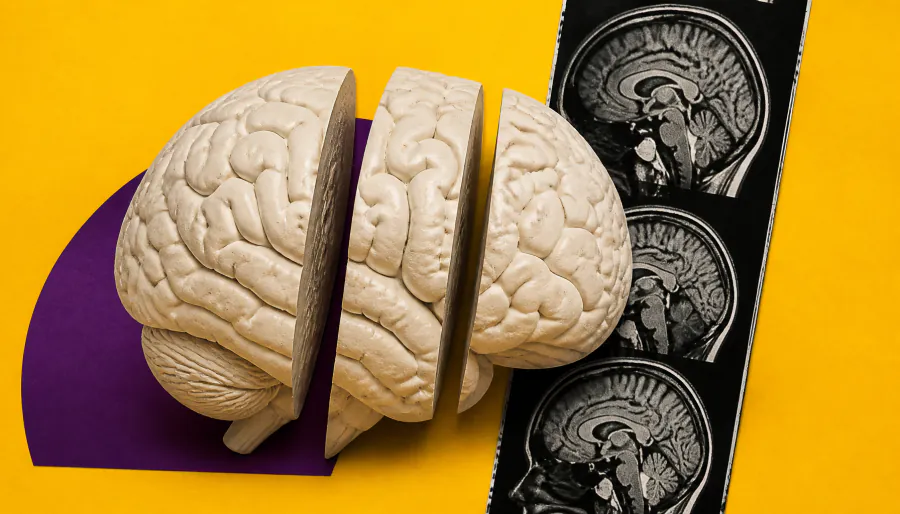
A Stanford Medicine-led study published in Nature Mental Health has identified three distinct biological brain types — or "biotypes" — in children with ADHD, anxiety, or both. Using an AI model to analyze thousands of fMRI brain scans from the Adolescent Brain Cognitive Development (ABCD) study, researchers found that these biotypes reflect disruptions in different brain circuits and don't align neatly with traditional symptom-based diagnoses.
The three biotypes — externalizing-disinhibited, internalizing-distressed, and mixed — each carry distinct behavioral profiles. Children from any diagnostic group (ADHD, anxiety, or both) could belong to any biotype, though certain patterns were more common in specific diagnoses. Even more striking: the biological patterns were detectable in brain scans before children received a formal diagnosis.
By the Numbers:
Why it matters: Current ADHD and anxiety treatment involves significant trial and error — children may try multiple medications over months before finding relief. These biotypes could serve as biomarkers to guide earlier, more targeted interventions, potentially reducing that burden for patients and families.