Turn on cookies to sign in
Signing in saves your progress to your Curie account. We can only do that with cookies on — turn them on to continue.

Cataract surgery is no longer just about restoring vision — it's about optimizing it. Experts now argue that even low levels of residual astigmatism should be addressed proactively, with toric IOLs and enhanced monofocal lenses leading the charge. Matching the right lens to each patient's visual lifestyle is becoming the new standard of care.
Cataract surgery has quietly shifted from a rehabilitative procedure to a refractive one — and that means the old tolerance for residual astigmatism no longer holds up. Dr. Brett Bielory argues that even modest cylinder (starting around 0.75 D) should be addressed in preoperative planning, backed by data showing that residual astigmatism above 0.5 D is linked to worse uncorrected distance acuity and lower patient satisfaction.
When it comes to correction, toric IOLs now outperform limbal relaxing incisions on predictability, spectacle independence, and residual astigmatism outcomes. Concerns about lens rotation have also largely been put to rest — a 2024 systematic review of nearly 5,000 eyes found a mean postoperative rotation of just 2.36°, well within acceptable limits.
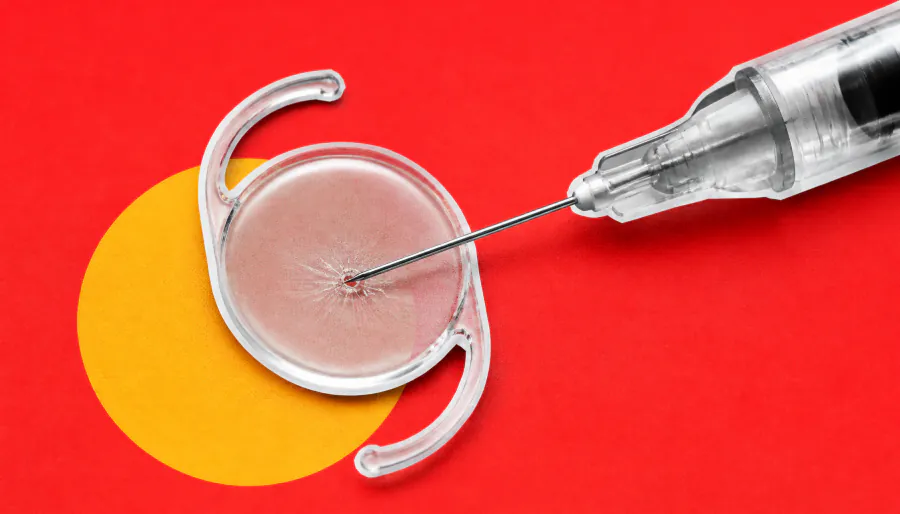
The bigger conversation is about enhanced monofocal (monofocal-plus) lenses, which extend depth of focus without the dysphotopsia risks of multifocals. Two distinct optical strategies — positive spherical aberration (RayOne EMV) for patients who need intermediate/near range, and aberration-neutral design (enVista Aspire) for those prioritizing contrast and distance — offer surgeons a meaningful choice.
Key Takeaways:
Why it matters: As patient expectations rise, a one-size-fits-all lens approach is no longer sufficient. Tailoring IOL selection to each patient's visual demands — and treating cylinder that was once ignored — can meaningfully improve outcomes and satisfaction after cataract surgery.