Turn on cookies to sign in
Signing in saves your progress to your Curie account. We can only do that with cookies on — turn them on to continue.
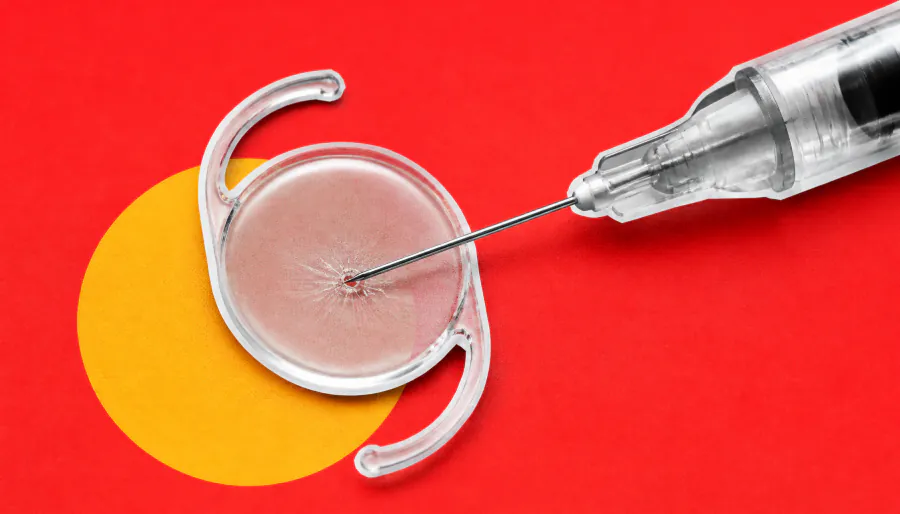
Intravitreal injections are among the most common procedures in ophthalmology — but they carry a rare risk of puncturing the lens capsule. An expert column outlines how surgeons can spot this complication early and adapt their technique to avoid serious outcomes. With the right preoperative clues and a modified surgical approach, even this high-risk scenario can end with excellent vision restoration.
Intravitreal injections — used to treat conditions like diabetic macular edema and age-related macular degeneration — are performed tens of millions of times globally each year. While generally very safe, they carry a small but real risk of accidentally puncturing the posterior lens capsule. When this happens, fluid rapidly enters the lens, causing it to swell into a dense white cataract and push the iris forward, shallowing the anterior chamber — a telltale sign surgeons should watch for.
Ophthalmologist Uday Devgan, MD, outlines a step-by-step surgical strategy for managing these cases safely. The key is recognizing the compromised capsule before surgery through careful history-taking and imaging, then modifying the operative approach — most critically, skipping standard in-the-bag phacoemulsification and hydrodissection, which can worsen the tear and send lens fragments into the vitreous.
Key Takeaways:
Why it matters: With the volume of intravitreal injections growing each year, even rare complications like lens capsule trauma will occur more frequently in absolute numbers. Knowing how to identify and surgically manage this complication can mean the difference between a successful outcome and a vision-threatening one.