Turn on cookies to sign in
Signing in saves your progress to your Curie account. We can only do that with cookies on — turn them on to continue.
Researchers at the University of Utah have identified a protein called BLST that may protect spinal discs from age-related damage. Using CRISPR gene editing, they showed that restoring BLST in human disc cells reduced signs of cellular aging and DNA damage. The discovery could eventually point to new treatments for back pain — and possibly cancer.
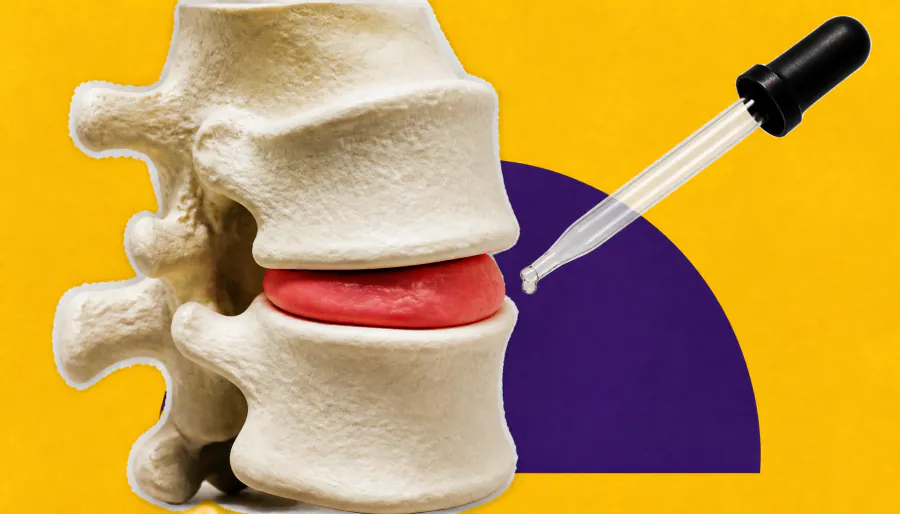
University of Utah researchers have made a first-of-its-kind discovery: a protein called BLST (also known as ZNF865) appears to play a key role in keeping spinal discs healthy as we age. The study, published in Aging Cell, found that BLST levels are lower in older and damaged spinal discs — the cushion-like structures between vertebrae that allow the spine to flex and move.
Using CRISPR gene editing, the team restored BLST production in human disc cells, which reduced markers of cellular aging and DNA damage. When BLST activity was reduced in rodent models, it triggered disc degeneration and pain-related behaviors — strongly suggesting that BLST helps shield disc tissue from the wear and tear of aging.
Key Takeaways:
Why it matters: Back pain is the third leading cause of disability globally, trailing only cardiac disease and drug use disorders. A gene-based therapy that targets its root cause — DNA damage in aging disc cells — could be a game-changer for millions of patients.