Turn on cookies to sign in
Signing in saves your progress to your Curie account. We can only do that with cookies on — turn them on to continue.
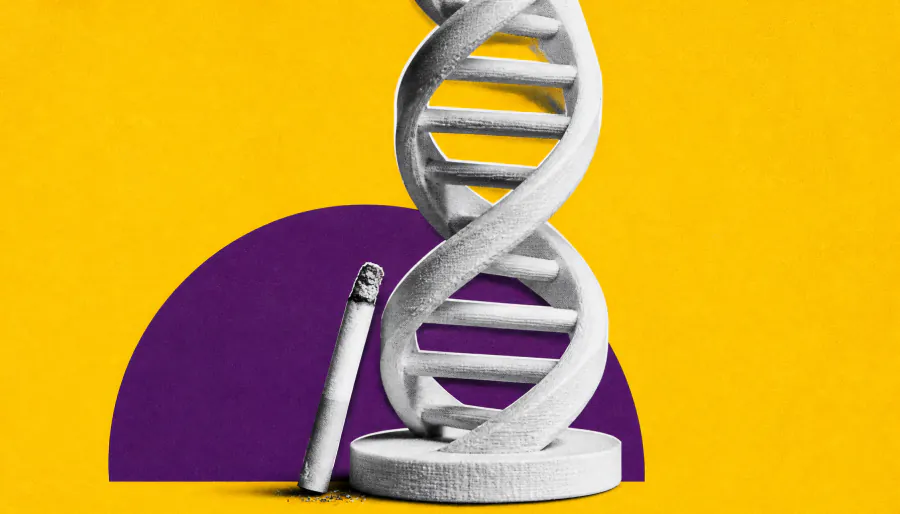
A landmark study from the University of Chicago and Johns Hopkins has mapped how genes and environment interact across multiple cell types in response to everyday exposures like alcohol, nicotine, and caffeine. By profiling over 1.4 million cells, researchers identified "response eQTLs" — genetic variants that change gene expression only under specific exposures — which overlap more frequently with disease-linked variants than standard genetic markers.
Why do two people exposed to the same environment end up with very different health outcomes? A new study published in Cell Genomics by researchers at the University of Chicago and Johns Hopkins University takes a major step toward answering that question. The team mapped gene-by-environment interactions across dozens of cell types by exposing lab-grown cultures — derived from reprogrammed adult donor cells — to alcohol, nicotine, and caffeine, ultimately profiling over 1.4 million individual cells.
The key discovery centers on "response eQTLs" — genetic variants that influence gene expression only in the presence of a specific environmental trigger, as opposed to baseline eQTLs that are always active. Crucially, response eQTLs sit in enhancer regions of the genome and overlap with disease-associated variants far more often than baseline eQTLs, suggesting they play a more dynamic role in disease risk. One notable example: an alcohol-triggered response eQTL near the LNX2 gene in intestinal cells overlaps with a known inflammatory bowel disease risk signal.
Key Takeaways:
Why it matters: This research lays the groundwork for truly personalized medicine — helping clinicians predict not just whether a treatment will work, but how a specific patient's genetic makeup will interact with their environment to shape disease risk over a lifetime.