Turn on cookies to sign in
Signing in saves your progress to your Curie account. We can only do that with cookies on — turn them on to continue.
A new topically acting rifamycin 1% gel is turning heads in ulcerative colitis treatment. In a phase 2 trial, nearly 46% of patients with distal UC or ulcerative proctitis achieved clinical remission at 6 weeks — more than triple the placebo rate of 14.3%. The gel's temperature-sensitive design helps it adhere to the rectal lining, potentially making it more effective and easier to tolerate than current suppository or enema options.
A phase 2 trial of rifamycin 1% topically acting gel (Cosmo) is generating excitement in the inflammatory bowel disease world. The randomized, double-blind, placebo-controlled study found that nearly half of patients with mildly to moderately active distal ulcerative colitis (UC) or ulcerative proctitis achieved clinical remission after 6 weeks of once-daily treatment — a 3.2-fold improvement over placebo, with no serious treatment-related adverse events.
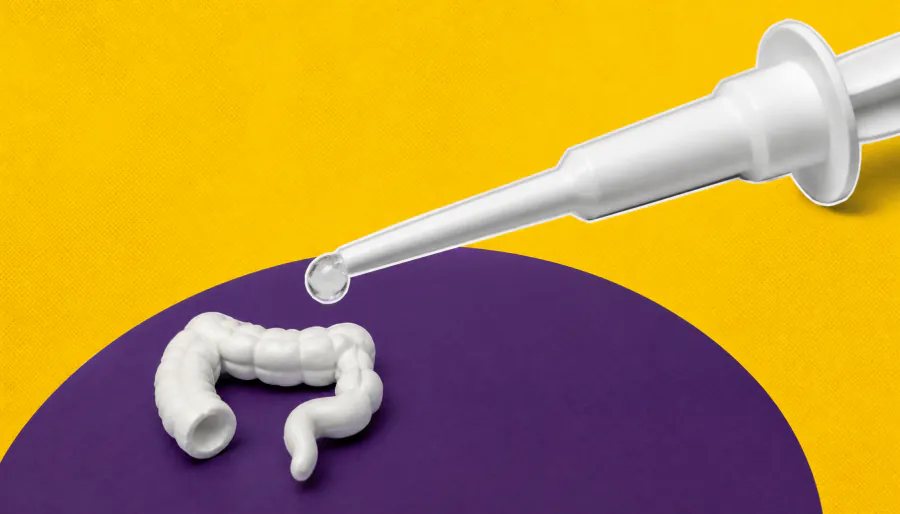
What makes this gel stand out is its clever delivery mechanism: administered as a liquid, it transforms into a gel upon reaching body temperature, allowing it to adhere directly to the rectal lining. This improves drug retention and targets the intestinal microbial environment thought to drive mucosal inflammation — all while minimizing systemic exposure. Experts note that rifamycin's dual role as both an antimicrobial and potential anti-inflammatory agent makes this approach particularly unique.
By the Numbers:
Why it matters: Current rectal therapies for distal UC — suppositories and enemas — are widely disliked by patients and often fail to adequately control symptoms like bowel urgency and tenesmus. If phase 3 trials confirm these results, rifamycin gel could become a first-line option for distal UC, offering a more tolerable and effective alternative.