Turn on cookies to sign in
Signing in saves your progress to your Curie account. We can only do that with cookies on — turn them on to continue.
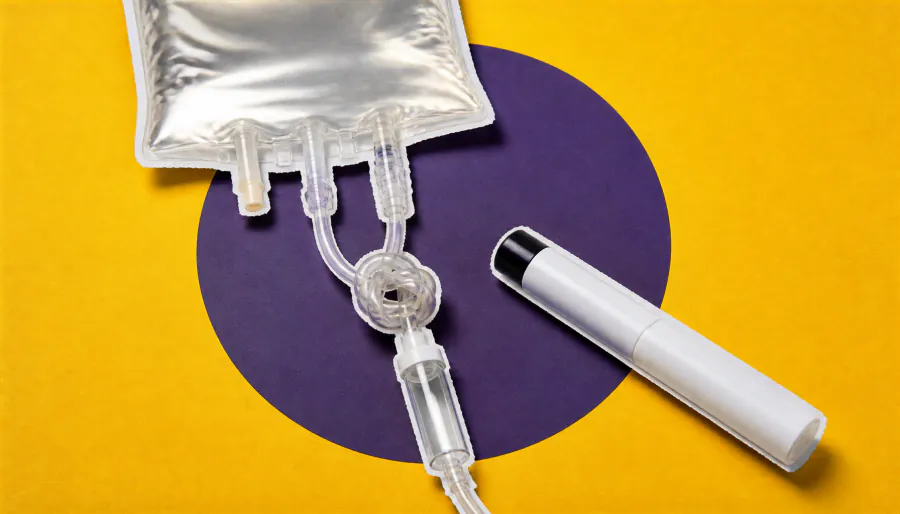
A phase 3 trial shows apraglutide, a next-gen GLP-2 analog, significantly reduces the amount of parenteral (IV) nutrition patients with short bowel syndrome need. Patients on the weekly injection cut their parenteral support volume by 25.5% versus 12.5% for placebo. The benefit was especially pronounced in patients with a stoma, offering a promising new treatment option for a condition with few alternatives.
For patients with short bowel syndrome and intestinal failure (SBS-IF), life often revolves around IV nutrition — a burdensome, risky, and quality-of-life-draining necessity. A new phase 3 trial called STARS is offering hope that a weekly injection could change that.
The trial tested apraglutide, a next-generation GLP-2 analog designed to promote intestinal adaptation, against placebo in 163 patients across 68 global sites. After 24 weeks, patients on apraglutide reduced their weekly parenteral support volume by 25.5%, compared to just 12.5% for those on placebo. Notably, 43% of apraglutide patients were able to cut at least one full day of IV nutrition per week, versus 27.5% on placebo. Seven patients on apraglutide achieved full enteral autonomy — meaning no IV nutrition at all — compared to zero in the placebo group.
The drug's benefits were most striking in patients with a stoma, while those with colon-in-continuity did not show a statistically significant improvement. Safety profiles were comparable between the two groups.
By the Numbers:
Why it matters: Long-term IV nutrition carries serious risks — including catheter infections and reduced quality of life. Apraglutide could meaningfully reduce dependence on parenteral support, especially for stoma patients, representing a significant step forward in SBS-IF management.