Turn on cookies to sign in
Signing in saves your progress to your Curie account. We can only do that with cookies on — turn them on to continue.
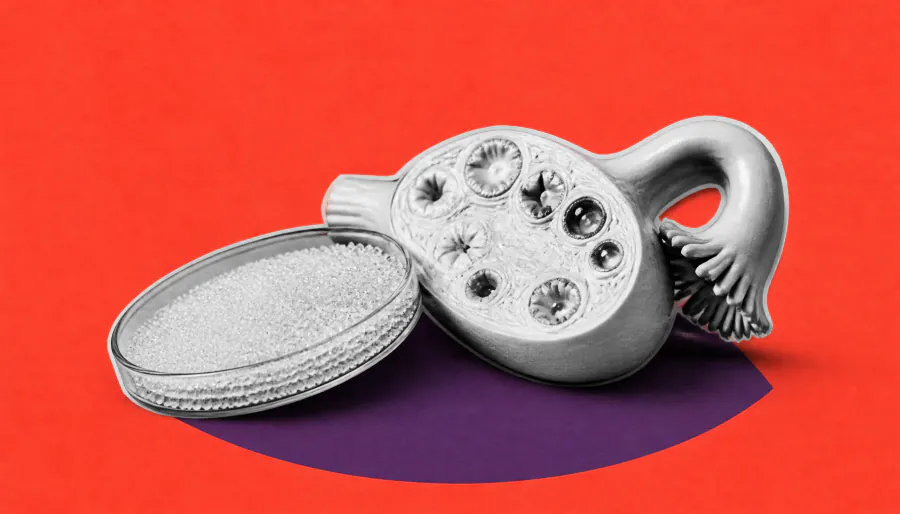
Nanoplastics could be quietly threatening female fertility before birth. A new mouse study found that mothers exposed to polystyrene nanoplastics during pregnancy passed the particles to their offspring's ovaries, reducing the primordial follicle pool — the foundation of a female's reproductive lifespan — by roughly 22%. The findings raise fresh concerns about plastic pollution's long-term impact on reproductive health.
Tiny plastic particles don't just stay in the environment — they can cross the placenta and settle in developing ovaries, according to a new mouse study published in Communications Biology. Researchers from several Chinese universities found that pregnant mice exposed daily to polystyrene nanoplastics (PS-NPs) transferred the particles to their female offspring, where the plastics disrupted a critical window of early ovarian development.
The damage centered on the formation of primordial follicles — the finite pool of immature eggs that determines a female's reproductive lifespan. Exposed offspring showed delayed breakdown of germ cell cysts and impaired follicle assembly, ultimately resulting in a significantly smaller ovarian reserve by postnatal day 7.
By the Numbers:
Why it matters: While the study was conducted in mice at doses not directly comparable to human exposure, it highlights a plausible biological pathway by which environmental plastic pollution could compromise female reproductive potential — starting before birth. Further research at environmentally relevant doses is urgently needed.