Turn on cookies to sign in
Signing in saves your progress to your Curie account. We can only do that with cookies on — turn them on to continue.

Scientists have discovered a protein called OMC1 that helps keep egg chromosomes intact as women age. The protein preserves a molecular "glue" that holds chromosomes together during eggs' long dormant period — and when it fails, chromosome errors linked to miscarriage and infertility rise. The findings could open new doors for understanding and potentially improving egg quality in older women.
Scientists at Chiba University, Japan, have identified a previously unknown protein — OMC1 (Oocyte-specific Meiotic Chromosome protein 1) — that plays a critical role in keeping egg chromosomes healthy from before birth through adulthood. Published in Nature Aging, the study sheds light on why egg quality declines with age and what the body does — or tries to do — to slow that process.
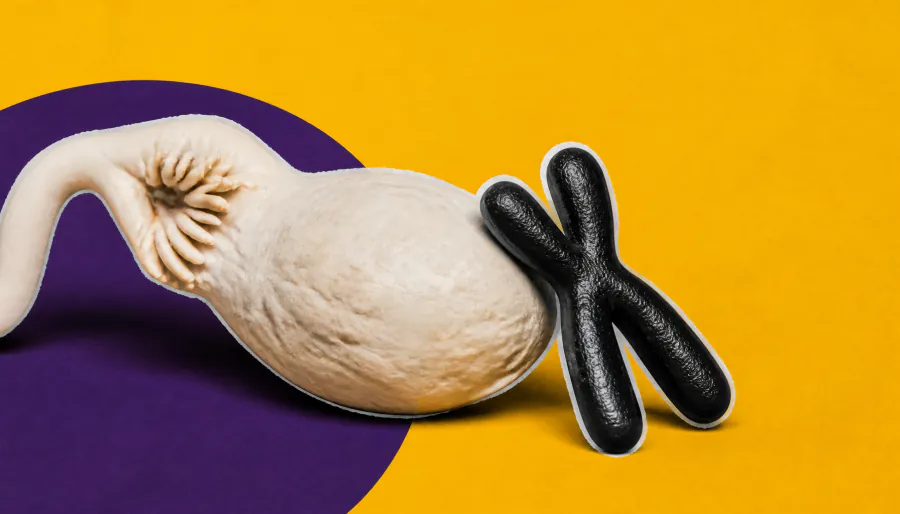
Here's the backstory: unlike sperm, eggs are formed during fetal development and then sit in a long dormant state for decades. During this time, a protein complex called REC8 cohesin acts as molecular glue, holding chromosomes together. The problem? REC8 is never replenished, and as it weakens over time, chromosomes can end up in the wrong numbers — a condition called aneuploidy, which is a leading cause of miscarriage, infertility, and conditions like Down syndrome.
The team found that OMC1 actively stabilizes REC8 on chromosomes. Mice without OMC1 showed premature cohesin loss and chromosome errors even at young ages — mirroring what's typically seen in aged eggs. Restoring OMC1 in adult oocytes partially reversed these errors.
Key Takeaways:
Why it matters: As the average age of childbirth rises globally, understanding — and potentially targeting — mechanisms like OMC1 could transform how we approach fertility preservation and age-related reproductive decline.