Turn on cookies to sign in
Signing in saves your progress to your Curie account. We can only do that with cookies on — turn them on to continue.

MIT researchers found that precisely timed bursts of pink noise during sleep can amplify the brain's natural cerebrospinal fluid (CSF) waves — the mechanism that flushes out harmful waste. The discovery could open new doors for treating insomnia and neurodegenerative diseases like Alzheimer's. A startup is already working on a home headband device to make the technology accessible.
While you sleep, your brain runs its own cleaning cycle — waves of cerebrospinal fluid (CSF) sweep through, flushing out waste products like amyloid and tau proteins linked to Alzheimer's disease. Now, MIT researchers have found a way to make those waves bigger, and the secret ingredient is sound.
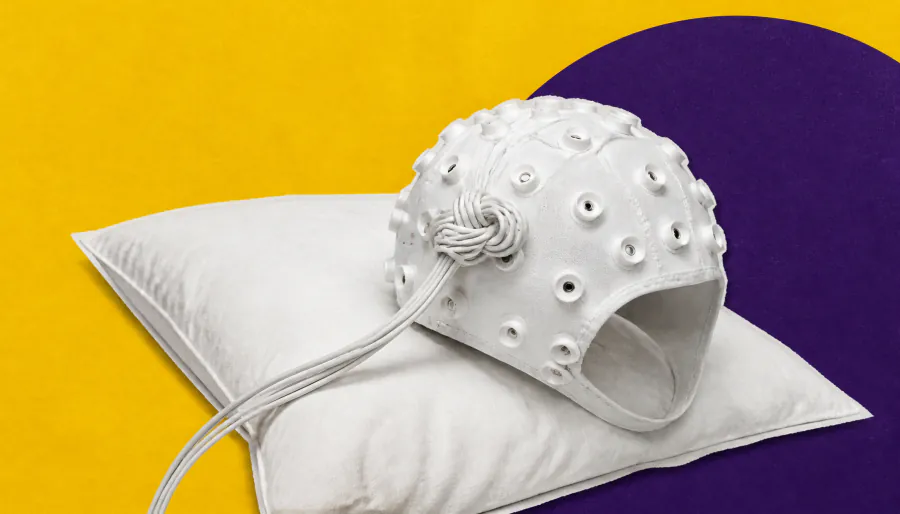
The team used ultra-short, 50-millisecond bursts of pink noise — think steady rainfall or a distant waterfall — timed precisely to the peaks of the brain's slow electrical waves during non-REM sleep. Using a combination of EEG and fMRI, they developed a real-time algorithm to predict and hit those peak moments, amplifying both the electrical waves and the CSF flow that follows. Tested in 14 healthy volunteers, the sounds boosted brain cleaning waves without waking participants.
Key Takeaways:
Why it matters: If boosting CSF flow proves clinically meaningful, this non-invasive, sound-based approach could become a powerful tool against Alzheimer's and other dementias. A spinout company is already developing a consumer headband to bring the technology home.